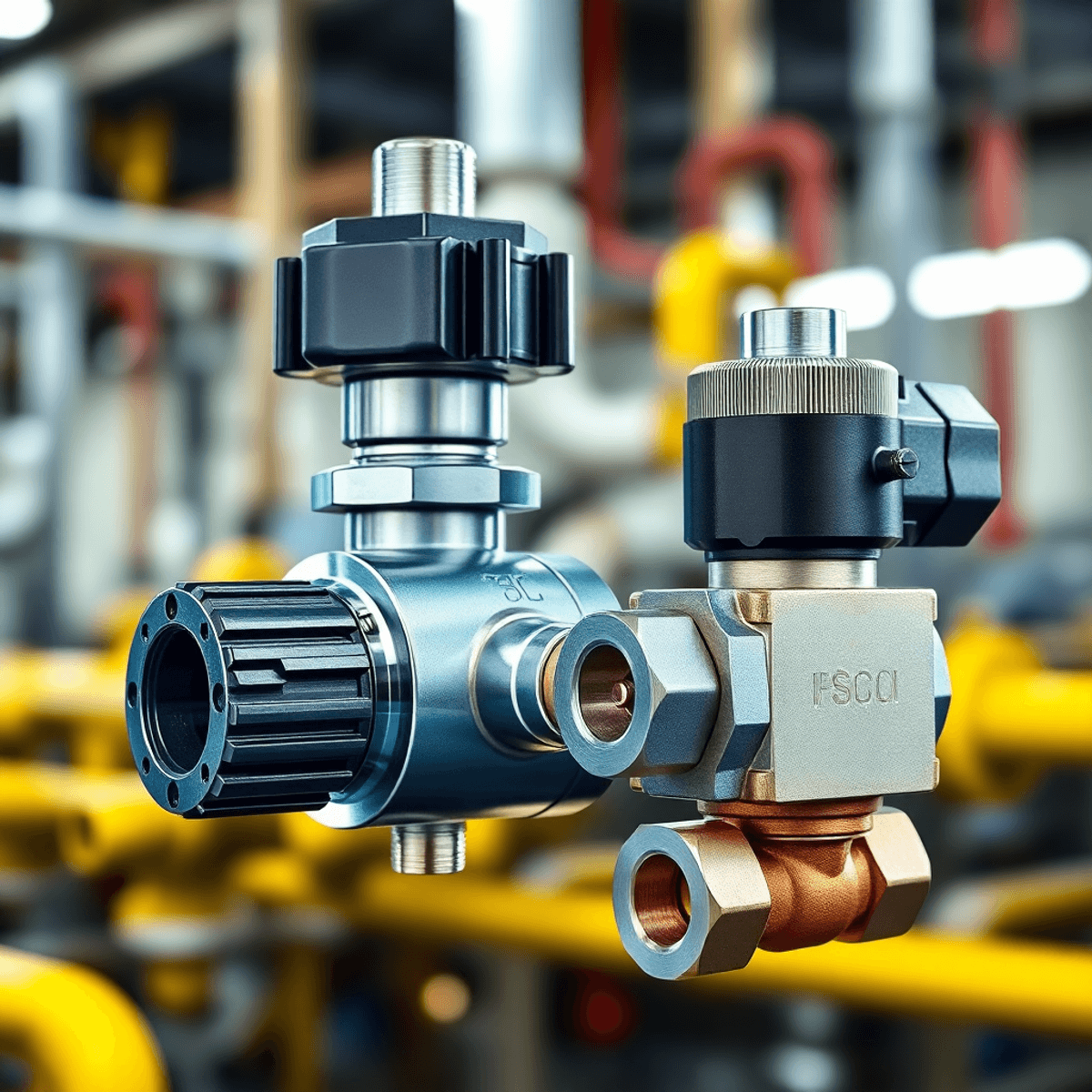
The body of a solenoid valve is the main structure that houses the internal components and provides the pathway for fluid flow. It is typically made from materials such as brass, stainless steel, or plastic, depending on the application and the type of fluid being controlled.
Characteristics – Material Composition: Common materials include brass for general applications, stainless steel for corrosive environments, and plastic for lightweight or low-pressure systems. – Design: The body design can vary, including configurations like two-way, three-way, or multi-port, depending on the valve’s function. – Size and Porting: The body size and porting configuration determine the flow capacity and installation compatibility with piping systems. – Pressure Ratings: The body must withstand specific pressure ratings, which can vary based on the application and fluid type.
Examples – A brass body solenoid valve used in water supply systems, providing reliable performance in residential plumbing. – A stainless steel body solenoid valve designed for chemical processing, offering resistance to corrosive substances. – A plastic body solenoid valve utilized in irrigation systems, lightweight and cost-effective for low-pressure applications.
Characteristics – Two stable states: A bistable solenoid valve can maintain its position in either of two states without continuous power. – Energy-efficient: It consumes power only during the switching process, making it more energy-efficient than other types of solenoid valves. – Manual override: Many bistable valves come with a manual override feature, allowing for operation without electrical input. – Reliable: These valves are known for their reliability and longevity, as they do not require constant power to hold their position.
Examples – Bistable solenoid valve in pneumatic systems: Used to control air flow in applications where maintaining a specific position is crucial, such as in automated machinery. – Bistable solenoid valve in irrigation systems: Employed to switch between different watering zones without needing continuous power, enhancing energy efficiency. – Bistable solenoid valve in automotive applications: Utilized in systems that require switching between two states, such as locking mechanisms or fluid control systems.
An electromechanical device combines electrical and mechanical processes to perform a specific function. In the context of solenoid valves, this means that the valve’s operation is controlled by an electrical signal, which activates a solenoid to move a plunger or armature, thereby opening or closing the valve.
Characteristics: – Electrical Activation: Operated by an electrical current that energizes the solenoid. – Mechanical Movement: Converts electrical energy into mechanical movement to control fluid flow. – Quick Response: Provides rapid actuation, allowing for fast opening and closing of the valve. – Precision Control: Enables precise control of fluid dynamics in various applications.
Examples: – Automotive Applications: Used in fuel injection systems to control the flow of fuel. – Industrial Automation: Employed in manufacturing processes for controlling pneumatic or hydraulic systems. – Home Appliances: Found in washing machines to manage water intake and drainage. – HVAC Systems: Utilized to regulate the flow of refrigerants or water in heating and cooling systems.
A ball valve is a type of valve that uses a spherical disc, known as a ball, to control the flow of fluid through it. The ball has a hole or port through the center, allowing fluid to pass when the valve is open. When the ball is rotated 90 degrees, the port is perpendicular to the flow, effectively shutting off the flow.
Characteristics – Quick Operation: Ball valves can be opened or closed with a quarter turn, making them easy to operate. – Tight Seal: They provide a reliable seal, preventing leaks when closed. – Durability: Made from robust materials, ball valves are designed to withstand high pressure and temperature. – Versatility: Suitable for various applications, including water, gas, and oil.
Examples – Full Port Ball Valve: This type has a ball with a hole that matches the pipe diameter, allowing for maximum flow. – Reduced Port Ball Valve: The ball has a smaller hole, which can restrict flow but is often more compact. – Trunnion Ball Valve: This design features a trunnion that supports the ball, making it suitable for high-pressure applications.
Air pressure is the force exerted by the weight of air above a given point, typically measured in pounds per square inch (psi) or pascals (Pa). It plays a crucial role in various applications, including the operation of solenoid valves, which rely on specific pressure levels to function effectively.
Characteristics – Measurement Units: Commonly measured in psi, bar, or kPa. – Atmospheric Pressure: Standard atmospheric pressure at sea level is approximately 14.7 psi (101.3 kPa). – Variability: Air pressure can change with altitude, weather conditions, and temperature. – Impact on Systems: Variations in air pressure can affect the performance of pneumatic systems and solenoid valves.
Examples – Pneumatic Tools: Air pressure is essential for the operation of tools like nail guns and air compressors. – Weather Systems: High and low-pressure systems influence weather patterns, affecting air pressure readings. – HVAC Systems: Air pressure is crucial in heating, ventilation, and air conditioning systems for proper airflow and efficiency.
The flow rate refers to the volume of fluid that passes through a given point in a system over a specified period of time. It is a crucial parameter in the design and operation of solenoid valves, as it determines how effectively a valve can control the flow of liquids or gases.
Characteristics – Measurement Units: Commonly measured in gallons per minute (GPM), liters per minute (LPM), or cubic meters per hour (m³/h). – Influencing Factors: Flow rate can be affected by factors such as pressure, temperature, and the viscosity of the fluid. – Valve Sizing: Proper sizing of solenoid valves is essential to ensure that they can handle the desired flow rate without causing excessive pressure drops or inefficiencies.
Examples – A solenoid valve in a water irrigation system may have a flow rate of 10 GPM, allowing it to efficiently distribute water to crops. – In a pneumatic system, a solenoid valve might control air flow with a flow rate of 50 LPM, ensuring that machinery operates smoothly.
Pressure regulators and solenoid valves are critical components in industrial applications. They play a crucial role in managing fluid dynamics and ensuring operational safety.
Pressure Regulators: These devices maintain a consistent outlet pressure, which is vital for efficient system performance. They prevent pressure fluctuations that can lead to equipment damage or inefficient processes.
Solenoid Valves: These electrically controlled valves manage the flow of fluids with precision, allowing for automated control in various systems.
The combination of pressure regulators and solenoid valves offers numerous advantages:
Enhanced operational efficiency
Reduced energy consumption
Improved safety measures
In this article, we will explore how integrating these two technologies can significantly enhance industrial efficiency. Understanding their functionalities and synergies will provide insights into optimizing your industrial operations. By examining their roles across various applications, you will gain valuable knowledge to implement these solutions effectively in your processes.
Understanding Pressure Regulators and Solenoid Valves
Pressure regulators and solenoid valves are essential components in industrial settings, playing vital roles in pressure control and fluid control systems.
Definition and Function
Pressure Regulators
These devices maintain a predetermined outlet pressure regardless of fluctuations in the inlet pressure. They ensure that processes operate within safe and efficient pressure ranges.
Solenoid Valves
These electrically operated valves control the flow of liquids or gases within a system. When energized, the solenoid coil creates a magnetic field that opens or closes the valve, enabling precise fluid control.
Importance of Stable Outlet Pressure
Maintaining stable outlet pressure is crucial for:
Ensuring consistent product quality
Preventing equipment damage from overpressure
Enhancing the efficiency of processes by reducing energy consumption
Types of Pressure Regulators
Single-stage Regulators: Designed for applications where inlet pressure does not fluctuate significantly. They offer quick response times but may not maintain stability under varying conditions.
Two-stage Regulators: Ideal for applications requiring more accurate pressure control. The first stage reduces the high inlet pressure to an intermediate level, while the second stage fine-tunes it to the desired outlet pressure.
Electronic Pressure Regulators: Utilize electronic sensors and actuators for precise control, allowing real-time adjustments based on system demands.
Solenoid Valve Types
Understanding solenoid valve types enhances their application potential:
2-way Valves: Control flow through two ports; ideal for simple on/off operations.
3-way Valves: Offer three ports to redirect flow, useful in diverting applications or mixing different fluids.
Direct-acting Valves: Operate using electromagnetic force directly on the valve seat; suitable for low-pressure applications.
Indirect-acting Valves: Use pilot pressure to operate; well-suited for high-flow and high-pressure systems.
The synergy between these components fosters improved operational efficiency, laying a foundation for enhanced industrial performance.
The Synergy Between Pressure Regulators and Solenoid Valves
Pressure regulators and solenoid valves create a powerful combination in industrial settings, enhancing fluid dynamics and process management. Their collaboration ensures precise fluid control, which is critical for maintaining operational efficiency.
Solenoid valves act as on/off switches or flow controllers
This synergy allows for:
Accurate flow rates
Responsive adjustments to changing conditions
Enhanced safety by preventing overpressure situations
Process Management
The integration of both technologies streamlines operations. Examples include:
Automated systems that respond to pressure changes in real time
Reduced manual intervention, minimizing human error
Benefits of the Combination
Integrating pressure regulators with solenoid valves leads to significant advantages, such as:
Improved Efficiency: Reduced energy consumption through optimized flow control.
Cost Savings: Minimizing wastage of resources and lowering maintenance costs due to fewer system failures.
Increased Longevity: Better management of pressure fluctuations extends the lifespan of equipment.
This combination not only enhances operational efficiency but also fosters reliability in various industrial applications, making it an essential element in modern automation.
Real-world Applications Across Industries
Pressure regulators and solenoid valves are essential in many industries, ensuring smooth and dependable operations. Here’s a look at the sectors that use these technologies:
1. Manufacturing Automation
Accurate control of fluid flow is crucial for machinery operation. Pressure regulators maintain optimal pressure levels, while solenoid valves enable quick on/off control, enhancing production efficiency.
2. Chemical Processing
In this industry, maintaining consistent pressure is vital for safety and product quality. Pressure regulators manage outlet pressure during reactions, while solenoid valves control the flow of hazardous materials, minimizing risks.
3. Food Processing
Hygiene and accuracy are paramount in food applications. Pressure regulators ensure that processing equipment operates within safe pressure ranges. Solenoid valves facilitate the precise dispensing of liquids, contributing to product consistency.
4. HVAC Systems
In heating and cooling applications, managing air and fluid flow is critical. Pressure regulators help maintain desired pressures in duct systems. Solenoid valves enable efficient control of refrigerants and hot water circulation.
The use of pressure regulators and solenoid valves not only makes processes smoother but also improves safety and productivity in these diverse industries.
Texas Industrial Remcor: A Leader in Valve Technology
Texas Industrial Remcor has established itself as a prominent player in the valve manufacturing industry since its inception in 1972. This family-owned business, located in Little River Academy, Texas, has built a reputation for integrity and competitive pricing. With decades of experience, they specialize in various valve solutions tailored for multiple sectors including agriculture, automotive, landscaping, and HVAC systems.
Key highlights of Texas Industrial Remcor include:
Specialization in Sprayer Valves: Known for developing high-quality sprayer valves that effectively manage fluid control applications. These valves are crucial in industries requiring precise regulation.
Advanced Control Systems: The company offers sophisticated control systems that integrate seamlessly with pressure regulators and solenoid valves. This synergy enhances operational efficiency and reliability.
Commitment to Quality: Texas Industrial Remcor focuses on engineering perfection into every product. Their attention to detail and smart technology ensures long-lasting performance that meets the rigorous demands of various industries.
With a strong foundation and commitment to innovation, Texas Industrial Remcor continues to make significant contributions to the valve manufacturing landscape, positioning itself as a trusted partner for American and international companies alike.
Future Trends in Industrial Automation Technologies
The world of industrial automation is changing quickly. New trends are transforming how industries handle fluid and air regulation solutions. Here are some important developments to watch for:
1. Smart Technology Integration
IoT devices are being integrated into pressure regulators and solenoid valves, enabling real-time monitoring and control. This connectivity improves operational efficiency by providing data-driven insights.
2. Artificial Intelligence
AI algorithms are increasingly being used to predict system failures and optimize performance. Predictive maintenance reduces downtime and extends the lifespan of equipment.
3. Energy Efficiency Focus
There is a growing emphasis on energy-efficient solutions. Manufacturers are developing advanced pressure regulators and solenoid valves that minimize energy consumption while maintaining performance standards.
4. Customization and Modular Solutions
Industries require more customized solutions. Manufacturers are responding by offering adaptable pressure regulation systems that can be easily integrated into existing operations.
5. Sustainability Initiatives
A shift towards sustainable practices influences product design. Companies are prioritizing eco-friendly materials and energy-efficient technologies, aligning with global sustainability goals.
These future trends indicate a more connected, efficient, and sustainable industrial environment where pressure regulators and solenoid valves play a vital role in driving innovation and operational excellence.
Conclusion
Pressure regulators and solenoid valves are essential for improving industrial efficiency. They ensure stable outlet pressure and control fluid dynamics, which are crucial for smooth operations in various industries.
Key points to consider:
Importance of regulation technologies: These components ensure precision and reliability in processes, reducing downtime and operational costs.
Benefits of implementation: Utilizing pressure regulators and solenoid valves can lead to significant improvements in productivity and safety.
As you evaluate your own applications, think about how these technologies could impact your operations. Whether in manufacturing, chemical processing, or HVAC systems, integrating pressure regulators and solenoid valves can bring substantial benefits.
Take action now to enhance your industrial efficiency. Look for solutions that are tailored to your specific needs and explore how regulation technologies can optimize your processes. Embrace the potential of these crucial components for a more efficient future.
In the intricate world of fluid control, two unsung heroes quietly orchestrate the flow: solenoid valves work and pressure regulators. These workhorses, though often hidden behind the scenes, play crucial roles in diverse applications, from powering industrial machinery to regulating water pressure in your sprinklers. But what exactly are they, and how do they work together to maintain order in the realm of fluids?
Use Solenoid Valves: The Electrified Gatekeepers
Imagine a miniature electromagnet controlling a valve. That’s the essence of a solenoid valve. When an electrical current energizes the coil, it creates a magnetic force that opens or closes a valve, regulating the flow of fluids (liquids, gases, or even slurries). These valves offer several advantages:
Fast response: They can switch flow states incredibly quickly, making them ideal for applications requiring precise timing and control.
Remote control: Being electrically operated, they can be remotely controlled from afar, eliminating the need for manual intervention.
Versatility: Available in various sizes, materials, and configurations, they can handle a wide range of pressures, temperatures, and fluids.
However, solenoid valves have limitations too. They require an electrical power source, and their flow capacity can be restricted by their size. Additionally, continuous operation can generate heat, requiring proper heat dissipation considerations.
Pressure Regulators: Maintaining the Balance
Imagine a guardian ensuring consistent water pressure in your home, regardless of fluctuations in the main line. That’s the job of a pressure regulator. These devices automatically adjust an incoming fluid’s pressure to a desired level, protecting downstream equipment and ensuring optimal performance. Here are some key types:
Relief valves: Release excess pressure beyond a set point, safeguarding systems from overpressure damage.
Backpressure regulators: Maintain a constant downstream pressure regardless of upstream variations.
Reducing valves: Lower high incoming pressure to a stable, usable level.
Pressure regulators come in various forms, from simple diaphragm-operated designs to complex electronically controlled models. Choosing the right one depends on the specific application’s pressure requirements and flow characteristics.
The Dynamic Duo: Working in Harmony
Solenoid valves and pressure regulators often work hand-in-hand. For example:
Irrigation systems: A solenoid valve controls water flow to sprinklers, while a pressure regulator ensures consistent pressure, optimizing sprinkler performance and preventing damage.
Pneumatic systems: Solenoid valves direct air flow, while pressure regulators maintain constant air pressure for efficient operation of machinery.
Medical equipment: Solenoid valves control fluid flow in devices like dialysis machines, while pressure regulators ensure precise pressure delivery for safe and effective treatment.
By understanding their individual functions and how they complement each other, you can optimize fluid control in various applications.
Choosing the Right Combination: A Balancing Act
Selecting the appropriate solenoid valve and pressure regulator requires careful consideration of several factors:
Application requirements: Understand the specific flow rates, pressures, and fluid types involved.
Valve characteristics: Consider size, material, flow capacity, and pressure rating.
Regulator type and range: Choose a regulator that can handle the desired pressure range and flow characteristics.
Compatibility: Ensure the valve and regulator are compatible with each other and the overall system.
Consulting with a fluid control expert can ensure you choose the optimal combination for your specific needs.
Beyond the Basics: Advanced Applications
Solenoid valves and pressure regulators are not limited to simple on/off or fixed-pressure control. Advanced models offer features like:
Proportional control: Regulate flow or pressure precisely based on an analog signal.
Multiple ports: Manage flow in complex systems with multiple inlets and outlets.
Fail-safe mechanisms: Ensure safe operation even in case of power or signal loss.
These advanced features enable even more sophisticated fluid control applications in sectors like automotive, aerospace, and chemical processing.
From Everyday Necessities to Cutting-Edge Technology
Though often unnoticed, solenoid valves and pressure regulators play a vital role in our daily lives. From the water flowing from your faucet to the complex machinery powering industries, these dynamic duos ensure the smooth and efficient flow of fluids. As technology advances, expect even more innovative designs and functionalities, further expanding the reach of these essential control components.
A pressure regulator is a valve utilized across a wide range of industries to control the flow of liquid or gas within a larger system. This tool improves the safety and performance of high-pressure supply tanks. It enables an operator to establish a predetermined, stable pressure for even discharge of a tank’s contents. Controlling the pressure within supply tanks also helps prevent leakages, which is particularly vital in industries that use hazardous fluids or gases. This type of pressure control makes it possible for operators to safely work with supply tanks that may otherwise be too pressurized to operate.
HOW DOES A PRESSURE REGULATOR WORK?
The goal of the pressure regulator is to maintain a lower outlet pressure even when the inlet pressure fluctuates. In order to achieve this, pressure regulators must reduce inlet pressure. One method of regulating this pressure is through the use of an internal spring. Once the operator sets the spring pressure, the system will maintain that set point pressure whether the tank’s contents are actively discharging or not. Spring compression controls the position of a piston to open a port within the tank, thus relieving pressure as the system discharges its liquid or gas. As the tank’s contents are discharging, the spring overcomes the gas or liquid pressure and changes position, moving to close off the port. The power of the pump stroke determines the size of the shock wave that ultimately results in that spring movement. The operator can set the output pressure to match the needs of the desired application, choosing how evenly to distribute the spray.
Another method for controlling pressure is to prevent flow back into the tank. Pressure rises when a system is no longer discharging until the operator allows more fluid through or opens the discharge once again by repositioning the butterfly. This method provides for even spray by absorbing the shock waves within the tank’s contents, but it is not as successful when over-pressurization occurs with the system.
WHERE TO USE PRESSURE REGULATORS
Pressure regulators are versatile tools with uses across a range of different industries. In particular, they play a vital role in industrial applications. By controlling the flow of dangerous or volatile materials, pressure regulators improve the safety of these work environments.
In critical applications within the aerospace industry, pressure regulators are able to operate in harsh conditions that expose them to extreme high and low temperatures, corrosive materials, and frequent vibrations. In these settings, pressure regulators are often an important component in systems such as altitude control systems and reaction control systems.
These regulators perform well in many applications by keeping fluid flow stable and preventing sudden pressure surges. This makes them highly valuable in sprayers and sprinklers, which typically perform best at lower pressures. As they are able to control the flow of liquid, pressure regulators are also an excellent tool within the agricultural industry. They improve the efficiency of irrigation systems, reducing the number of water pressure fluctuations. Additionally, pressure regulators have the ability to distribute water evenly to the crops, thus avoiding overwatering.
Beyond their uses in the industrial, aerospace, and agricultural sectors, pressure regulators have applications in the following: