A control circuit is a system designed to manage the operation of devices, such as solenoid valves, by controlling the flow of electrical signals. It typically includes components like switches, relays, and sensors that work together to ensure the desired operation of the system.
Characteristics – Automation: Control circuits enable automated operation of devices, reducing the need for manual intervention. – Feedback Mechanism: Many control circuits incorporate feedback systems that allow for adjustments based on the output. – Safety Features: Control circuits often include safety mechanisms to prevent malfunction or damage to the system. – Versatility: They can be used in various applications, from simple on/off controls to complex systems requiring precise regulation.
Examples – Industrial Automation: In manufacturing, control circuits are used to operate solenoid valves that manage the flow of fluids in production lines. – HVAC Systems: Control circuits regulate solenoid valves in heating, ventilation, and air conditioning systems to maintain desired temperature settings. – Irrigation Systems: Automated irrigation systems utilize control circuits to open and close solenoid valves based on soil moisture levels.
The body of a solenoid valve is the main structure that houses the internal components and provides the pathway for fluid flow. It is typically made from materials such as brass, stainless steel, or plastic, depending on the application and the type of fluid being controlled.
Characteristics – Material Composition: Common materials include brass for general applications, stainless steel for corrosive environments, and plastic for lightweight or low-pressure systems. – Design: The body design can vary, including configurations like two-way, three-way, or multi-port, depending on the valve’s function. – Size and Porting: The body size and porting configuration determine the flow capacity and installation compatibility with piping systems. – Pressure Ratings: The body must withstand specific pressure ratings, which can vary based on the application and fluid type.
Examples – A brass body solenoid valve used in water supply systems, providing reliable performance in residential plumbing. – A stainless steel body solenoid valve designed for chemical processing, offering resistance to corrosive substances. – A plastic body solenoid valve utilized in irrigation systems, lightweight and cost-effective for low-pressure applications.
Characteristics – Two stable states: A bistable solenoid valve can maintain its position in either of two states without continuous power. – Energy-efficient: It consumes power only during the switching process, making it more energy-efficient than other types of solenoid valves. – Manual override: Many bistable valves come with a manual override feature, allowing for operation without electrical input. – Reliable: These valves are known for their reliability and longevity, as they do not require constant power to hold their position.
Examples – Bistable solenoid valve in pneumatic systems: Used to control air flow in applications where maintaining a specific position is crucial, such as in automated machinery. – Bistable solenoid valve in irrigation systems: Employed to switch between different watering zones without needing continuous power, enhancing energy efficiency. – Bistable solenoid valve in automotive applications: Utilized in systems that require switching between two states, such as locking mechanisms or fluid control systems.
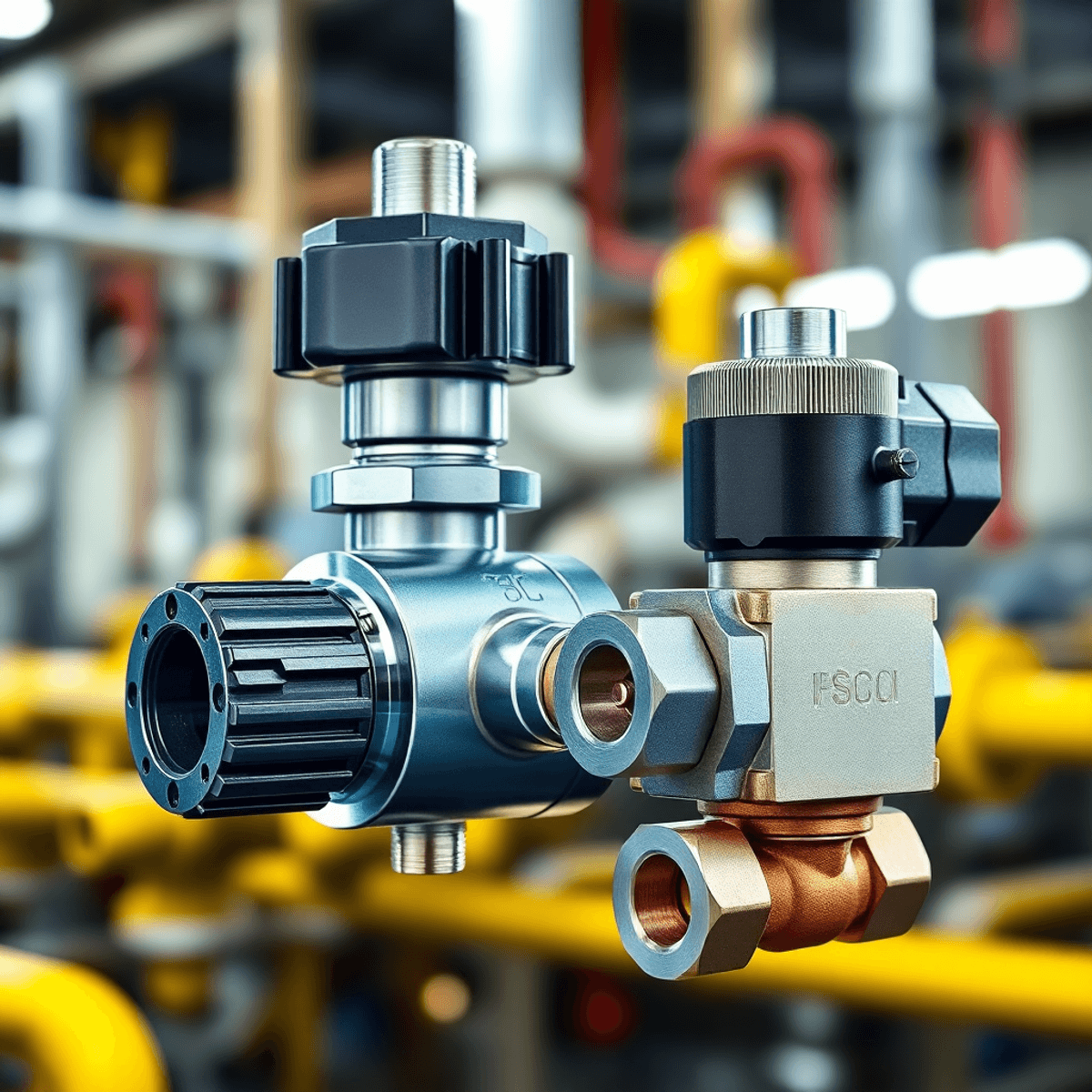
An electromechanical device combines electrical and mechanical processes to perform a specific function. In the context of solenoid valves, this means that the valve’s operation is controlled by an electrical signal, which activates a solenoid to move a plunger or armature, thereby opening or closing the valve.
Characteristics: – Electrical Activation: Operated by an electrical current that energizes the solenoid. – Mechanical Movement: Converts electrical energy into mechanical movement to control fluid flow. – Quick Response: Provides rapid actuation, allowing for fast opening and closing of the valve. – Precision Control: Enables precise control of fluid dynamics in various applications.
Examples: – Automotive Applications: Used in fuel injection systems to control the flow of fuel. – Industrial Automation: Employed in manufacturing processes for controlling pneumatic or hydraulic systems. – Home Appliances: Found in washing machines to manage water intake and drainage. – HVAC Systems: Utilized to regulate the flow of refrigerants or water in heating and cooling systems.
A ball valve is a type of valve that uses a spherical disc, known as a ball, to control the flow of fluid through it. The ball has a hole or port through the center, allowing fluid to pass when the valve is open. When the ball is rotated 90 degrees, the port is perpendicular to the flow, effectively shutting off the flow.
Characteristics – Quick Operation: Ball valves can be opened or closed with a quarter turn, making them easy to operate. – Tight Seal: They provide a reliable seal, preventing leaks when closed. – Durability: Made from robust materials, ball valves are designed to withstand high pressure and temperature. – Versatility: Suitable for various applications, including water, gas, and oil.
Examples – Full Port Ball Valve: This type has a ball with a hole that matches the pipe diameter, allowing for maximum flow. – Reduced Port Ball Valve: The ball has a smaller hole, which can restrict flow but is often more compact. – Trunnion Ball Valve: This design features a trunnion that supports the ball, making it suitable for high-pressure applications.
Air pressure is the force exerted by the weight of air above a given point, typically measured in pounds per square inch (psi) or pascals (Pa). It plays a crucial role in various applications, including the operation of solenoid valves, which rely on specific pressure levels to function effectively.
Characteristics – Measurement Units: Commonly measured in psi, bar, or kPa. – Atmospheric Pressure: Standard atmospheric pressure at sea level is approximately 14.7 psi (101.3 kPa). – Variability: Air pressure can change with altitude, weather conditions, and temperature. – Impact on Systems: Variations in air pressure can affect the performance of pneumatic systems and solenoid valves.
Examples – Pneumatic Tools: Air pressure is essential for the operation of tools like nail guns and air compressors. – Weather Systems: High and low-pressure systems influence weather patterns, affecting air pressure readings. – HVAC Systems: Air pressure is crucial in heating, ventilation, and air conditioning systems for proper airflow and efficiency.
The flow rate refers to the volume of fluid that passes through a given point in a system over a specified period of time. It is a crucial parameter in the design and operation of solenoid valves, as it determines how effectively a valve can control the flow of liquids or gases.
Characteristics – Measurement Units: Commonly measured in gallons per minute (GPM), liters per minute (LPM), or cubic meters per hour (m³/h). – Influencing Factors: Flow rate can be affected by factors such as pressure, temperature, and the viscosity of the fluid. – Valve Sizing: Proper sizing of solenoid valves is essential to ensure that they can handle the desired flow rate without causing excessive pressure drops or inefficiencies.
Examples – A solenoid valve in a water irrigation system may have a flow rate of 10 GPM, allowing it to efficiently distribute water to crops. – In a pneumatic system, a solenoid valve might control air flow with a flow rate of 50 LPM, ensuring that machinery operates smoothly.
Ever heard the word solenoid valve and thought it sounded like something out of a science fiction movie? You’re not alone. But guess what—it’s not some weird alien tech. In fact, solenoid valves are hard-working little devices that help control things like water, gas, air, and even soap! Yep, these small but mighty gadgets are everywhere—maybe even in your backyard sprinkler or your car.
Let’s break it down together—nice and easy.
So… What Is a Solenoid Valve?
A solenoid valve is like a gatekeeper. It opens and closes to let liquid or gas flow through pipes—kind of like a mini bouncer for water or air.
It has two main parts:
Solenoid (the brain): This is an electromagnetic coil that creates motion when you send it electricity.
Valve (the muscle): This is the part that opens or closes to control the flow.
When electricity hits the coil—click—the valve opens or shuts. That’s it! Science magic.
Where Do Solenoid Valves Show Up in Real Life?
Oh boy, they’re everywhere. Here’s where you might spot one:
Lawn sprinkler systems – They let the water out and keep your grass looking green.
Washing machines – They know when to let water in to clean your dirty socks.
Cars – Your windshield washer? Yep, solenoid valve.
Factories – Big machines use them to move air or liquids around for making stuff.
Irrigation systems – Farmers use ‘em to water crops just right.
Types of Solenoid Valves (Yes, There’s More Than One!)
You’ve got choices, folks! Depending on the job, the right solenoid valve can make all the difference.
Normally Open (NO): This one stays open until you tell it to shut. Great for systems that need to flow most of the time.
Normally Closed (NC): The default is shut tight until electricity opens it up. This is the most common kind.
Direct-Acting: These open up using just the solenoid power. Quick and good for low pressure.
Pilot-Operated: These need a bit of pressure to help them open—like using teamwork to move a heavy couch.
Common Problems (and How to Outsmart Them)
Even solenoid valves have bad days.
Here’s what might go wrong:
The valve won’t open or close? Might be junk or debris stuck inside.
It clicks but nothing happens? Could be low voltage or a bad coil.
It leaks? Time to check the seals and clean it out.
Maintenance is as simple as keeping it clean and dry—and not letting it fry with bad wiring.
Smart Valves Are a Thing Now?!
You bet. Solenoid valves are getting high-tech. Some are Wi-Fi or Bluetooth connected, and they can be controlled by your phone or even Alexa. That means your plants can be watered while you’re on vacation—score!
Why Should You Care About Solenoid Valves?
Well, if you:
Love plants 🌱
Own a car 🚗
Do laundry 👕
Want to save water 💧
Or plan to be an engineer one day 🧠
… then solenoid valves matter more than you think! They’re the secret heroes behind everyday comfort, clean clothes, and green lawns.
Final Thoughts (Let’s Wrap It Up With a Bow)
Solenoid valves are small, smart, and super important. They may not be flashy, but they do a ton of work quietly behind the scenes—kind of like the unsung heroes of your house or your car.
So next time you hear that click, remember: it’s just a tiny valve doing a big job. 💪
If you loved learning about solenoid valves, share this post with a friend, or drop a comment about where you’ve seen one in action! 🛠️
Why OEMs and Distributors Choose Texas Industrial Remcor
When production lines stall or a sprayer system goes down, every hour off-line gnaws at your bottom line. That’s why engineers, purchasing managers, and aftermarket distributors across North America and globally keep Texas Industrial Remcor (TIR) on speed dial. For more than five decades, our family-owned factory in Little River-Academy, Texas has combined small-town craftsmanship with lean, high-velocity manufacturing to deliver premium solenoid valves, pressure regulators, and turnkey control systems—without the overseas headaches.
Zero Tariffs, Zero Compromise
Because every TIR component is machined, wound, molded, and tested right here in the Lone Star State, you’ll never be blindsided by shifting import duties, port delays, or surprise brokerage fees. Zero tariffs translate directly into lower landed costs and cleaner P&Ls, while our ISO-calibrated QA program guarantees the precision you expect from top-shelf American engineering.
Same-Day or Next-Day Shipping—Every Order, Every Time
We stock our most requested SKUs in depth and operate two automated pick-and-pack lines. Place your order by 3 p.m. CT and it leaves our dock the same day; miss the cut-off by a hair and it still ships first thing the next morning. Whether you need a single ¾” poly solenoid valve for a field repair or a pallet of pressure regulators for a new OEM build, your parts will arrive fast, no excuses.
The Texas Advantage: Quality + Affordability
Labor rates may be lower overseas, but total cost of ownership tells a different story. TIR valves log tens of thousands of actuations without coil burnout; our regulators maintain rock-steady pressures season after season; and our control panels integrate seamlessly with modern CAN bus and ISOBUS architectures. Fewer replacements, less downtime, and zero tariff exposure mean our “Made in Texas” tag actually drives costs down over the life of your equipment.
Engineered for Your World
Agriculture: Corrosion-resistant brass, stainless, and nylon bodies stand up to aggressive crop-spray chemistries.
Industrial: High-flow, high-cycle valves tackle abrasive slurries, coolants, and compressed air with equal ease.
Municipal & Turf: Low-amp draw coils pair perfectly with battery-powered control boards for remote green-space management.
Need a custom manifold or a unique voltage? Our in-house R&D team can prototype, 3-D print, and CNC-machine pilot runs in days, not months—keeping your project on schedule and under budget.
Ready to Level Up Your Fluid Control?
Call us at (254) 982-4236, email [email protected], or explore the full line at sprayervalves.com. Experience the reliability of American-made components, the agility of same-day shipping, and the confidence that comes from partnering with a company as tough and dependable as Texas itself.
When downtime isn’t an option, count on Texas Industrial Remcor—where quality meets speed, and every valve ships with a handshake’s worth of Texas pride.
Pressure regulators and solenoid valves are critical components in industrial applications. They play a crucial role in managing fluid dynamics and ensuring operational safety.
Pressure Regulators: These devices maintain a consistent outlet pressure, which is vital for efficient system performance. They prevent pressure fluctuations that can lead to equipment damage or inefficient processes.
Solenoid Valves: These electrically controlled valves manage the flow of fluids with precision, allowing for automated control in various systems.
The combination of pressure regulators and solenoid valves offers numerous advantages:
Enhanced operational efficiency
Reduced energy consumption
Improved safety measures
In this article, we will explore how integrating these two technologies can significantly enhance industrial efficiency. Understanding their functionalities and synergies will provide insights into optimizing your industrial operations. By examining their roles across various applications, you will gain valuable knowledge to implement these solutions effectively in your processes.
Understanding Pressure Regulators and Solenoid Valves
Pressure regulators and solenoid valves are essential components in industrial settings, playing vital roles in pressure control and fluid control systems.
Definition and Function
Pressure Regulators
These devices maintain a predetermined outlet pressure regardless of fluctuations in the inlet pressure. They ensure that processes operate within safe and efficient pressure ranges.
Solenoid Valves
These electrically operated valves control the flow of liquids or gases within a system. When energized, the solenoid coil creates a magnetic field that opens or closes the valve, enabling precise fluid control.
Importance of Stable Outlet Pressure
Maintaining stable outlet pressure is crucial for:
Ensuring consistent product quality
Preventing equipment damage from overpressure
Enhancing the efficiency of processes by reducing energy consumption
Types of Pressure Regulators
Single-stage Regulators: Designed for applications where inlet pressure does not fluctuate significantly. They offer quick response times but may not maintain stability under varying conditions.
Two-stage Regulators: Ideal for applications requiring more accurate pressure control. The first stage reduces the high inlet pressure to an intermediate level, while the second stage fine-tunes it to the desired outlet pressure.
Electronic Pressure Regulators: Utilize electronic sensors and actuators for precise control, allowing real-time adjustments based on system demands.
Solenoid Valve Types
Understanding solenoid valve types enhances their application potential:
2-way Valves: Control flow through two ports; ideal for simple on/off operations.
3-way Valves: Offer three ports to redirect flow, useful in diverting applications or mixing different fluids.
Direct-acting Valves: Operate using electromagnetic force directly on the valve seat; suitable for low-pressure applications.
Indirect-acting Valves: Use pilot pressure to operate; well-suited for high-flow and high-pressure systems.
The synergy between these components fosters improved operational efficiency, laying a foundation for enhanced industrial performance.
The Synergy Between Pressure Regulators and Solenoid Valves
Pressure regulators and solenoid valves create a powerful combination in industrial settings, enhancing fluid dynamics and process management. Their collaboration ensures precise fluid control, which is critical for maintaining operational efficiency.
Solenoid valves act as on/off switches or flow controllers
This synergy allows for:
Accurate flow rates
Responsive adjustments to changing conditions
Enhanced safety by preventing overpressure situations
Process Management
The integration of both technologies streamlines operations. Examples include:
Automated systems that respond to pressure changes in real time
Reduced manual intervention, minimizing human error
Benefits of the Combination
Integrating pressure regulators with solenoid valves leads to significant advantages, such as:
Improved Efficiency: Reduced energy consumption through optimized flow control.
Cost Savings: Minimizing wastage of resources and lowering maintenance costs due to fewer system failures.
Increased Longevity: Better management of pressure fluctuations extends the lifespan of equipment.
This combination not only enhances operational efficiency but also fosters reliability in various industrial applications, making it an essential element in modern automation.
Real-world Applications Across Industries
Pressure regulators and solenoid valves are essential in many industries, ensuring smooth and dependable operations. Here’s a look at the sectors that use these technologies:
1. Manufacturing Automation
Accurate control of fluid flow is crucial for machinery operation. Pressure regulators maintain optimal pressure levels, while solenoid valves enable quick on/off control, enhancing production efficiency.
2. Chemical Processing
In this industry, maintaining consistent pressure is vital for safety and product quality. Pressure regulators manage outlet pressure during reactions, while solenoid valves control the flow of hazardous materials, minimizing risks.
3. Food Processing
Hygiene and accuracy are paramount in food applications. Pressure regulators ensure that processing equipment operates within safe pressure ranges. Solenoid valves facilitate the precise dispensing of liquids, contributing to product consistency.
4. HVAC Systems
In heating and cooling applications, managing air and fluid flow is critical. Pressure regulators help maintain desired pressures in duct systems. Solenoid valves enable efficient control of refrigerants and hot water circulation.
The use of pressure regulators and solenoid valves not only makes processes smoother but also improves safety and productivity in these diverse industries.
Texas Industrial Remcor: A Leader in Valve Technology
Texas Industrial Remcor has established itself as a prominent player in the valve manufacturing industry since its inception in 1972. This family-owned business, located in Little River Academy, Texas, has built a reputation for integrity and competitive pricing. With decades of experience, they specialize in various valve solutions tailored for multiple sectors including agriculture, automotive, landscaping, and HVAC systems.
Key highlights of Texas Industrial Remcor include:
Specialization in Sprayer Valves: Known for developing high-quality sprayer valves that effectively manage fluid control applications. These valves are crucial in industries requiring precise regulation.
Advanced Control Systems: The company offers sophisticated control systems that integrate seamlessly with pressure regulators and solenoid valves. This synergy enhances operational efficiency and reliability.
Commitment to Quality: Texas Industrial Remcor focuses on engineering perfection into every product. Their attention to detail and smart technology ensures long-lasting performance that meets the rigorous demands of various industries.
With a strong foundation and commitment to innovation, Texas Industrial Remcor continues to make significant contributions to the valve manufacturing landscape, positioning itself as a trusted partner for American and international companies alike.
Future Trends in Industrial Automation Technologies
The world of industrial automation is changing quickly. New trends are transforming how industries handle fluid and air regulation solutions. Here are some important developments to watch for:
1. Smart Technology Integration
IoT devices are being integrated into pressure regulators and solenoid valves, enabling real-time monitoring and control. This connectivity improves operational efficiency by providing data-driven insights.
2. Artificial Intelligence
AI algorithms are increasingly being used to predict system failures and optimize performance. Predictive maintenance reduces downtime and extends the lifespan of equipment.
3. Energy Efficiency Focus
There is a growing emphasis on energy-efficient solutions. Manufacturers are developing advanced pressure regulators and solenoid valves that minimize energy consumption while maintaining performance standards.
4. Customization and Modular Solutions
Industries require more customized solutions. Manufacturers are responding by offering adaptable pressure regulation systems that can be easily integrated into existing operations.
5. Sustainability Initiatives
A shift towards sustainable practices influences product design. Companies are prioritizing eco-friendly materials and energy-efficient technologies, aligning with global sustainability goals.
These future trends indicate a more connected, efficient, and sustainable industrial environment where pressure regulators and solenoid valves play a vital role in driving innovation and operational excellence.
Conclusion
Pressure regulators and solenoid valves are essential for improving industrial efficiency. They ensure stable outlet pressure and control fluid dynamics, which are crucial for smooth operations in various industries.
Key points to consider:
Importance of regulation technologies: These components ensure precision and reliability in processes, reducing downtime and operational costs.
Benefits of implementation: Utilizing pressure regulators and solenoid valves can lead to significant improvements in productivity and safety.
As you evaluate your own applications, think about how these technologies could impact your operations. Whether in manufacturing, chemical processing, or HVAC systems, integrating pressure regulators and solenoid valves can bring substantial benefits.
Take action now to enhance your industrial efficiency. Look for solutions that are tailored to your specific needs and explore how regulation technologies can optimize your processes. Embrace the potential of these crucial components for a more efficient future.