Posted on

Unlock Maximum Equipment Reliability

Reading Time: 5 minutes

Why Switching to USA-Made Solenoid Valves is a Game-Changer

When it comes to the backbone of agricultural and industrial spraying technology, few components are as critical—and often overlooked—as the humble solenoid valve. If you’re a grower, OEM, or service professional, you know just how disruptive a faulty valve can be. Yet, many continue to settle for imported or subpar valves, not realizing how much time, money, and efficiency they’re sacrificing.

In this blog, we’ll explore why making the switch to USA-made solenoid valves is not just an upgrade—it’s a transformational step in optimizing your equipment’s reliability, boosting performance, and safeguarding your bottom line. Whether you’re tired of patchy spray coverage, costly downtime, or constant maintenance headaches, read on to discover why your next solenoid valve should carry a Made-in-USA label.

What is a Solenoid Valve and Why Does Quality Matter?

solenoid valve is an electromechanically operated valve, foundational to controlling the flow of liquids and gases in a range of systems—from crop sprayers and irrigation rigs to industrial machinery and specialized manufacturing equipment. When a solenoid valve fails, leaks, or performs inconsistently, the consequences are swift: lost productivity, wasted resources, unplanned downtime, and sometimes equipment damage.

Many operators—especially in agriculture and OEM manufacturing—face recurring frustrations:

  • Solenoid valves that leak under pressure or temperature changes
  • Valves that fail prematurely, leading to rushed replacements
  • Inconsistent spray patterns, resulting in patchy applications and wasted product
  • Trouble sourcing replacements quickly, especially during the busy season

The problem isn’t always in your maintenance schedule; often, it starts with the quality and precision engineering of the solenoid valve itself.

The Hidden Costs of Low-Quality Solenoid Valves

Every hour lost in the field or on the line waiting for a replacement is an hour of productivity—and revenue—gone. Here’s what you risk with inferior solenoid valves:

  • Costly Downtime: Each leak or failure can mean complete stoppage for diagnosis and repair.
  • Maintenance Headaches: Unreliable valves require frequent attention, distracting from higher-value work.
  • Patchy Coverage: In agriculture, uneven spray can reduce yields and increase the risk of pests or disease.
  • Unexpected Expenses: Repeated part replacement adds up, impacting both operational budgets and profit margins.

USA-Made Solenoid Valves: Built for Reliability

Imagine a solenoid valve that just works—every time you need it. That’s the promise of USA-made solenoid valves manufactured with advanced engineering, premium-grade materials, and strict quality controls.

Why Make the Switch to USA-Made Solenoid Valves?

  • Precision-Engineered: Built to exacting standards for maximum durability and reliability.
  • Superior Materials: Only the highest quality metals and sealing materials, ensuring extended service life.
  • Consistent Spray Patterns: Designed for uniform application, so your jobs get done right every time.
  • Quick, Direct Delivery: Order as needed—no minimums or bulk requirements. Get it shipped straight to your operation.
  • Responsive, Local Support: Talk to knowledgeable support staff who understand both the products and your unique application needs.

As one satisfied customer reported:

“Call taker was very nice and the product arrived quickly, and worked as intended. On-time delivery always deserves special praise. Well-packed goods, great look for the packaging. Useful staff who can help quickly and efficiently.”

How Quality Solenoid Valves Reduce Downtime and Save Money

Time is money in agriculture and manufacturing. Here’s how upgrading to premium, American-made solenoid valves pays for itself:

  • Minimizing unplanned maintenance: Fewer failures mean more uptime for your sprayers and connected equipment.
  • Lower total cost of ownership: Durable construction means longer replacement cycles and reduced part spending over time.
  • Enhanced productivity: Consistent, accurate spray patterns translate to improved yields and product quality, lowering the risk of costly re-dos.

No Risk, No Hassle—Order With Confidence

Worried about trying something new? Texas Industrial Remcor, Inc. offers a 30-day satisfaction guarantee on every solenoid valve ordered. Experience the difference risk-free: if you’re not 100% satisfied, simply return your valve within 30 days for a full refund. No questions, no hassle.

Ready for the Busy Season? Stock is Limited

The busy agricultural season makes reliable supply chains critical. Unlike other suppliers who require bulk orders or leave you stranded on backorder, our USA-made solenoid valves are available for immediate shipment. You can order as few or as many as you need—and receive them fast, just in time to keep your operation running without interruption.

How to Order Your USA-Made Solenoid Valves

Ordering is straightforward and designed for your convenience:

  1. Visit our website to see our selection of USA-made solenoid valves engineered for your application.
  2. Place your order—no minimums or bulk commitments required.
  3. Receive fast, direct shipping straight to your door.
  4. Experience unmatched reliability and performance.
  5. Rest easy with our 30-day satisfaction guarantee.

Why Distributors and OEMs Trust Us

Texas Industrial Remcor, Inc. isn’t just another parts supplier—we’re your strategic partner in reliability. Our USA-made solenoid valves help your customers stay productive, reduce complaints, and foster long-term loyalty.

  • Reduce emergency service calls and warranty claims
  • Enhance your reputation for quality and dependability
  • Offer superior, American-made solutions to your customers

Customer Spotlight

Here’s feedback from a recent customer who made the switch:

“We switched to these USA-made solenoid valves last season and immediately saw a drop in urgent service requests. The installation was simple, spray performance is uniform, and our customers appreciate the difference. Plus, we love supporting American manufacturing.”

Solenoid Valve Selection Tips for Optimal Performance

Choosing the right solenoid valve is about more than just price. Consider:

  • Application flow rates and pressures
  • Temperature and chemical compatibility
  • Voltage and electrical connection types
  • Service environment and longevity demands

Our technical support staff can help you select the perfect valve for your application—just contact us with your specifications.

Action Step: Upgrade Your Solenoid Valve Today

Don’t let another season slip by with leaking, failing, or unreliable valves. Make the switch to premium, USA-made solenoid valves and experience the difference firsthand. Reduced downtime, improved coverage, simplified sourcing, and expert support await.

Order your USA-made solenoid valves now and unlock the reliability your operation deserves.


About Texas Industrial Remcor, Inc.
We proudly serve equipment owners, OEMs, and distributors with precision-engineered, American-made solenoid valves. Our mission: Deliver performance, reliability, and responsive service with every valve—guaranteed.

Posted on

What in the World Is a Solenoid Valve? (And Why Should You Care?)

Reading Time: 4 minutes

Ever heard the word solenoid valve and thought it sounded like something out of a science fiction movie? You’re not alone. But guess what—it’s not some weird alien tech. In fact, solenoid valves are hard-working little devices that help control things like water, gas, air, and even soap! Yep, these small but mighty gadgets are everywhere—maybe even in your backyard sprinkler or your car.

Let’s break it down together—nice and easy.


So… What Is a Solenoid Valve?

A solenoid valve is like a gatekeeper. It opens and closes to let liquid or gas flow through pipes—kind of like a mini bouncer for water or air.

It has two main parts:

  • Solenoid (the brain): This is an electromagnetic coil that creates motion when you send it electricity.
  • Valve (the muscle): This is the part that opens or closes to control the flow.

When electricity hits the coil—click—the valve opens or shuts. That’s it! Science magic.


Where Do Solenoid Valves Show Up in Real Life?

Oh boy, they’re everywhere. Here’s where you might spot one:

  • Lawn sprinkler systems – They let the water out and keep your grass looking green.
  • Washing machines – They know when to let water in to clean your dirty socks.
  • Cars – Your windshield washer? Yep, solenoid valve.
  • Factories – Big machines use them to move air or liquids around for making stuff.
  • Irrigation systems – Farmers use ‘em to water crops just right.

Types of Solenoid Valves (Yes, There’s More Than One!)

You’ve got choices, folks! Depending on the job, the right solenoid valve can make all the difference.

  • Normally Open (NO): This one stays open until you tell it to shut. Great for systems that need to flow most of the time.
  • Normally Closed (NC): The default is shut tight until electricity opens it up. This is the most common kind.
  • Direct-Acting: These open up using just the solenoid power. Quick and good for low pressure.
  • Pilot-Operated: These need a bit of pressure to help them open—like using teamwork to move a heavy couch.

Common Problems (and How to Outsmart Them)

Even solenoid valves have bad days.

Here’s what might go wrong:

  • The valve won’t open or close? Might be junk or debris stuck inside.
  • It clicks but nothing happens? Could be low voltage or a bad coil.
  • It leaks? Time to check the seals and clean it out.

Maintenance is as simple as keeping it clean and dry—and not letting it fry with bad wiring.


Smart Valves Are a Thing Now?!

You bet. Solenoid valves are getting high-tech. Some are Wi-Fi or Bluetooth connected, and they can be controlled by your phone or even Alexa. That means your plants can be watered while you’re on vacation—score!


Why Should You Care About Solenoid Valves?

Well, if you:

  • Love plants 🌱
  • Own a car 🚗
  • Do laundry 👕
  • Want to save water 💧
  • Or plan to be an engineer one day 🧠

… then solenoid valves matter more than you think! They’re the secret heroes behind everyday comfort, clean clothes, and green lawns.


Final Thoughts (Let’s Wrap It Up With a Bow)

Solenoid valves are small, smart, and super important. They may not be flashy, but they do a ton of work quietly behind the scenes—kind of like the unsung heroes of your house or your car.

So next time you hear that click, remember: it’s just a tiny valve doing a big job. 💪


If you loved learning about solenoid valves, share this post with a friend, or drop a comment about where you’ve seen one in action! 🛠️

Posted on

Built in Texas, Delivered at the Speed You Need

Reading Time: 3 minutes

Why OEMs and Distributors Choose Texas Industrial Remcor

When production lines stall or a sprayer system goes down, every hour off-line gnaws at your bottom line. That’s why engineers, purchasing managers, and aftermarket distributors across North America and globally keep Texas Industrial Remcor (TIR) on speed dial. For more than five decades, our family-owned factory in Little River-Academy, Texas has combined small-town craftsmanship with lean, high-velocity manufacturing to deliver premium solenoid valves, pressure regulators, and turnkey control systems—without the overseas headaches.


Zero Tariffs, Zero Compromise

Because every TIR component is machined, wound, molded, and tested right here in the Lone Star State, you’ll never be blindsided by shifting import duties, port delays, or surprise brokerage fees. Zero tariffs translate directly into lower landed costs and cleaner P&Ls, while our ISO-calibrated QA program guarantees the precision you expect from top-shelf American engineering.


Same-Day or Next-Day Shipping—Every Order, Every Time

We stock our most requested SKUs in depth and operate two automated pick-and-pack lines. Place your order by 3 p.m. CT and it leaves our dock the same day; miss the cut-off by a hair and it still ships first thing the next morning. Whether you need a single ¾” poly solenoid valve for a field repair or a pallet of pressure regulators for a new OEM build, your parts will arrive fast, no excuses.


The Texas Advantage: Quality + Affordability

Labor rates may be lower overseas, but total cost of ownership tells a different story. TIR valves log tens of thousands of actuations without coil burnout; our regulators maintain rock-steady pressures season after season; and our control panels integrate seamlessly with modern CAN bus and ISOBUS architectures. Fewer replacements, less downtime, and zero tariff exposure mean our “Made in Texas” tag actually drives costs down over the life of your equipment.


Engineered for Your World

  • Agriculture: Corrosion-resistant brass, stainless, and nylon bodies stand up to aggressive crop-spray chemistries.
  • Industrial: High-flow, high-cycle valves tackle abrasive slurries, coolants, and compressed air with equal ease.
  • Municipal & Turf: Low-amp draw coils pair perfectly with battery-powered control boards for remote green-space management.

Need a custom manifold or a unique voltage? Our in-house R&D team can prototype, 3-D print, and CNC-machine pilot runs in days, not months—keeping your project on schedule and under budget.


Ready to Level Up Your Fluid Control?

Call us at (254) 982-4236, email [email protected], or explore the full line at sprayervalves.com. Experience the reliability of American-made components, the agility of same-day shipping, and the confidence that comes from partnering with a company as tough and dependable as Texas itself.

When downtime isn’t an option, count on Texas Industrial Remcor—where quality meets speed, and every valve ships with a handshake’s worth of Texas pride.

Posted on

Pressure Regulators and Solenoid Valves

Reading Time: 6 minutes
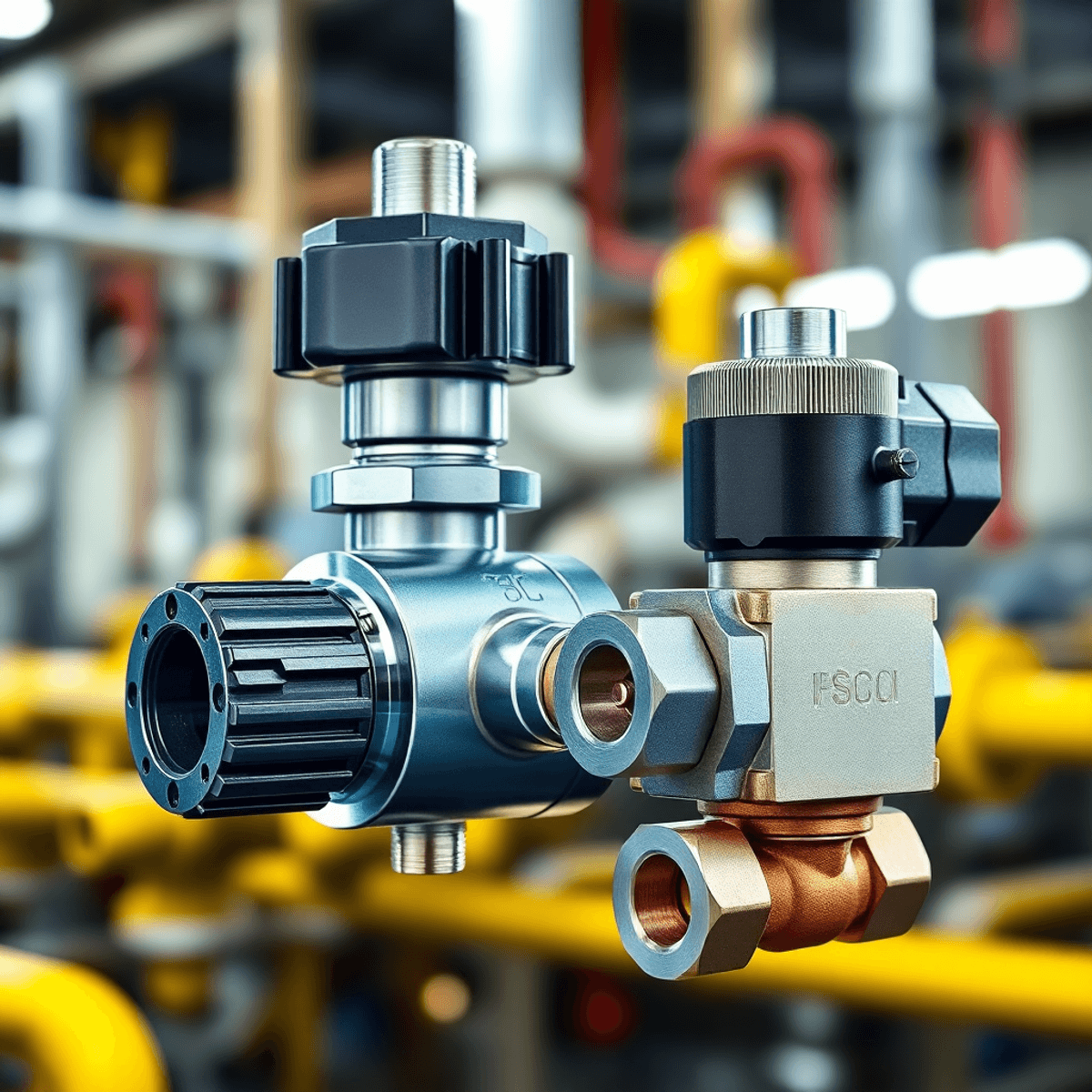
Close-up of a pressure regulator and solenoid valve with intricate mechanisms, set against an industrial background of blurred pipes, showcasing vibrant metallic textures.

Introduction

Pressure regulators and solenoid valves are critical components in industrial applications. They play a crucial role in managing fluid dynamics and ensuring operational safety.

  • Pressure Regulators: These devices maintain a consistent outlet pressure, which is vital for efficient system performance. They prevent pressure fluctuations that can lead to equipment damage or inefficient processes.
  • Solenoid Valves: These electrically controlled valves manage the flow of fluids with precision, allowing for automated control in various systems.

The combination of pressure regulators and solenoid valves offers numerous advantages:

  1. Enhanced operational efficiency
  2. Reduced energy consumption
  3. Improved safety measures

In this article, we will explore how integrating these two technologies can significantly enhance industrial efficiency. Understanding their functionalities and synergies will provide insights into optimizing your industrial operations. By examining their roles across various applications, you will gain valuable knowledge to implement these solutions effectively in your processes.

Understanding Pressure Regulators and Solenoid Valves

Pressure regulators and solenoid valves are essential components in industrial settings, playing vital roles in pressure control and fluid control systems.

Definition and Function

Pressure Regulators

These devices maintain a predetermined outlet pressure regardless of fluctuations in the inlet pressure. They ensure that processes operate within safe and efficient pressure ranges.

Solenoid Valves

These electrically operated valves control the flow of liquids or gases within a system. When energized, the solenoid coil creates a magnetic field that opens or closes the valve, enabling precise fluid control.

Importance of Stable Outlet Pressure

Maintaining stable outlet pressure is crucial for:

  1. Ensuring consistent product quality
  2. Preventing equipment damage from overpressure
  3. Enhancing the efficiency of processes by reducing energy consumption

Types of Pressure Regulators

  1. Single-stage Regulators: Designed for applications where inlet pressure does not fluctuate significantly. They offer quick response times but may not maintain stability under varying conditions.
  2. Two-stage Regulators: Ideal for applications requiring more accurate pressure control. The first stage reduces the high inlet pressure to an intermediate level, while the second stage fine-tunes it to the desired outlet pressure.
  3. Electronic Pressure Regulators: Utilize electronic sensors and actuators for precise control, allowing real-time adjustments based on system demands.

Solenoid Valve Types

Understanding solenoid valve types enhances their application potential:

  • 2-way Valves: Control flow through two ports; ideal for simple on/off operations.
  • 3-way Valves: Offer three ports to redirect flow, useful in diverting applications or mixing different fluids.
  • Direct-acting Valves: Operate using electromagnetic force directly on the valve seat; suitable for low-pressure applications.
  • Indirect-acting Valves: Use pilot pressure to operate; well-suited for high-flow and high-pressure systems.

The synergy between these components fosters improved operational efficiency, laying a foundation for enhanced industrial performance.

The Synergy Between Pressure Regulators and Solenoid Valves

Pressure regulators and solenoid valves create a powerful combination in industrial settings, enhancing fluid dynamics and process management. Their collaboration ensures precise fluid control, which is critical for maintaining operational efficiency.

Working Together

Fluid Control

  • Pressure regulators maintain stable outlet pressure
  • Solenoid valves act as on/off switches or flow controllers

This synergy allows for:

  1. Accurate flow rates
  2. Responsive adjustments to changing conditions
  3. Enhanced safety by preventing overpressure situations

Process Management

The integration of both technologies streamlines operations. Examples include:

  • Automated systems that respond to pressure changes in real time
  • Reduced manual intervention, minimizing human error

Benefits of the Combination

Integrating pressure regulators with solenoid valves leads to significant advantages, such as:

  • Improved Efficiency: Reduced energy consumption through optimized flow control.
  • Cost Savings: Minimizing wastage of resources and lowering maintenance costs due to fewer system failures.
  • Increased Longevity: Better management of pressure fluctuations extends the lifespan of equipment.

This combination not only enhances operational efficiency but also fosters reliability in various industrial applications, making it an essential element in modern automation.

Real-world Applications Across Industries

Pressure regulators and solenoid valves are essential in many industries, ensuring smooth and dependable operations. Here’s a look at the sectors that use these technologies:

1. Manufacturing Automation

Accurate control of fluid flow is crucial for machinery operation. Pressure regulators maintain optimal pressure levels, while solenoid valves enable quick on/off control, enhancing production efficiency.

2. Chemical Processing

In this industry, maintaining consistent pressure is vital for safety and product quality. Pressure regulators manage outlet pressure during reactions, while solenoid valves control the flow of hazardous materials, minimizing risks.

3. Food Processing

Hygiene and accuracy are paramount in food applications. Pressure regulators ensure that processing equipment operates within safe pressure ranges. Solenoid valves facilitate the precise dispensing of liquids, contributing to product consistency.

4. HVAC Systems

In heating and cooling applications, managing air and fluid flow is critical. Pressure regulators help maintain desired pressures in duct systems. Solenoid valves enable efficient control of refrigerants and hot water circulation.

The use of pressure regulators and solenoid valves not only makes processes smoother but also improves safety and productivity in these diverse industries.

Texas Industrial Remcor: A Leader in Valve Technology

Texas Industrial Remcor has established itself as a prominent player in the valve manufacturing industry since its inception in 1972. This family-owned business, located in Little River Academy, Texas, has built a reputation for integrity and competitive pricing. With decades of experience, they specialize in various valve solutions tailored for multiple sectors including agriculture, automotive, landscaping, and HVAC systems.

Key highlights of Texas Industrial Remcor include:

  • Specialization in Sprayer Valves: Known for developing high-quality sprayer valves that effectively manage fluid control applications. These valves are crucial in industries requiring precise regulation.
  • Advanced Control Systems: The company offers sophisticated control systems that integrate seamlessly with pressure regulators and solenoid valves. This synergy enhances operational efficiency and reliability.
  • Commitment to Quality: Texas Industrial Remcor focuses on engineering perfection into every product. Their attention to detail and smart technology ensures long-lasting performance that meets the rigorous demands of various industries.

With a strong foundation and commitment to innovation, Texas Industrial Remcor continues to make significant contributions to the valve manufacturing landscape, positioning itself as a trusted partner for American and international companies alike.

Future Trends in Industrial Automation Technologies

The world of industrial automation is changing quickly. New trends are transforming how industries handle fluid and air regulation solutions. Here are some important developments to watch for:

1. Smart Technology Integration

IoT devices are being integrated into pressure regulators and solenoid valves, enabling real-time monitoring and control. This connectivity improves operational efficiency by providing data-driven insights.

2. Artificial Intelligence

AI algorithms are increasingly being used to predict system failures and optimize performance. Predictive maintenance reduces downtime and extends the lifespan of equipment.

3. Energy Efficiency Focus

There is a growing emphasis on energy-efficient solutions. Manufacturers are developing advanced pressure regulators and solenoid valves that minimize energy consumption while maintaining performance standards.

4. Customization and Modular Solutions

Industries require more customized solutions. Manufacturers are responding by offering adaptable pressure regulation systems that can be easily integrated into existing operations.

5. Sustainability Initiatives

A shift towards sustainable practices influences product design. Companies are prioritizing eco-friendly materials and energy-efficient technologies, aligning with global sustainability goals.

These future trends indicate a more connected, efficient, and sustainable industrial environment where pressure regulators and solenoid valves play a vital role in driving innovation and operational excellence.

Conclusion

Pressure regulators and solenoid valves are essential for improving industrial efficiency. They ensure stable outlet pressure and control fluid dynamics, which are crucial for smooth operations in various industries.

Key points to consider:

  • Importance of regulation technologies: These components ensure precision and reliability in processes, reducing downtime and operational costs.
  • Benefits of implementation: Utilizing pressure regulators and solenoid valves can lead to significant improvements in productivity and safety.

As you evaluate your own applications, think about how these technologies could impact your operations. Whether in manufacturing, chemical processing, or HVAC systems, integrating pressure regulators and solenoid valves can bring substantial benefits.

Take action now to enhance your industrial efficiency. Look for solutions that are tailored to your specific needs and explore how regulation technologies can optimize your processes. Embrace the potential of these crucial components for a more efficient future.

Posted on

From Prototype to Production: A Behind-the-Scenes Look at Solenoid Valve Manufacturing

Reading Time: 3 minutes

Introduction
Solenoid valves may appear simple, but their development is a complex process requiring precision and expertise. From initial prototypes to large-scale production, each step is critical to ensuring reliability and performance. This article provides an exclusive look behind the scenes at how Texas Industrial Remcor designs and manufactures solenoid valves that exceed industry standards.


Step 1: Understanding Customer Needs

The process begins with understanding the specific requirements of the customer or application. Key considerations include:

  • Application Specifications: Pressure, temperature, and flow rate requirements.
  • Material Preferences: Metals or composites suited for the operating environment.
  • Special Features: Automation compatibility, corrosion resistance, or energy-efficient designs.

Example: A shortline equipment manufacturer required valves that could handle corrosive fertilizers while maintaining precision control. Our team collaborated with them to define exact parameters.


Step 2: Conceptual Design and Prototyping

Once requirements are defined, the engineering team begins creating designs:

  • 3D Modeling: Advanced CAD software is used to develop precise valve designs.
  • Material Selection: Engineers choose the optimal materials for durability and performance.
  • Prototyping: 3D-printed or machined prototypes are created for initial testing.

Highlight: At Texas Industrial Remcor, rapid prototyping reduces lead times, allowing customers to test initial designs within weeks.


Step 3: Rigorous Testing and Validation

Prototypes undergo extensive testing to ensure they meet all performance criteria:

  • Cycle Testing: Simulates thousands of opening and closing cycles to evaluate durability.
  • Environmental Testing: Assesses performance under extreme temperatures, pressures, and corrosive conditions.
  • Leak Detection: Ensures valves meet stringent leak prevention standards.
  • Functional Validation: Tests compatibility with customer systems, including flow rate and pressure regulation.

Highlight: Our testing processes adhere to ISO standards, guaranteeing reliable performance in demanding environments.


Step 4: Precision Manufacturing

Once prototypes pass testing, the design moves to the production phase:

  • Material Preparation: Metals and composites are sourced and prepared for machining.
  • Precision Machining: CNC machines create valve components with exact tolerances.
  • Coil Winding and Assembly: Solenoid coils are wound, assembled, and integrated with the valve body.
  • Surface Finishing: Components are polished, coated, or treated to enhance durability and corrosion resistance.

Highlight: Texas Industrial Remcor uses state-of-the-art machinery to ensure consistent quality across every batch.


Step 5: Quality Control and Final Testing

Before valves leave the factory, they undergo final quality checks:

  • Performance Testing: Every valve is tested under simulated operating conditions.
  • Visual Inspection: Ensures components are free of defects and meet aesthetic standards.
  • Batch Certification: Each production batch is certified for compliance with industry regulations.

Highlight: Our zero-defect policy ensures that every valve meets or exceeds customer expectations.


Step 6: Packaging and Shipping

After passing quality control, valves are carefully packaged to prevent damage during shipping:

  • Eco-Friendly Packaging: Sustainable materials are used to reduce environmental impact.
  • Labeling and Documentation: Each shipment includes detailed specifications and installation guides.
  • Shipping Logistics: Orders are tracked to ensure timely delivery to customers worldwide.

Highlight: Our streamlined shipping process ensures fast delivery, even for custom orders.


From Prototype to Production: The Texas Industrial Remcor Difference

What sets Texas Industrial Remcor apart is our commitment to innovation and customer satisfaction:

  • Tailored Solutions: Every valve is designed with the customer’s unique needs in mind.
  • Cutting-Edge Technology: We leverage the latest in manufacturing and testing equipment.
  • Expert Support: Our team provides guidance throughout the process, from initial consultation to after-sales service.

Conclusion
The journey from prototype to production is a meticulous process that ensures solenoid valves meet the highest standards of quality and performance. At Texas Industrial Remcor, we take pride in our ability to deliver valves that exceed expectations, helping our customers achieve operational excellence.


Ready to see the difference that quality manufacturing makes? Contact Texas Industrial Remcor today to discuss your solenoid valve needs and learn more about our production process.


Posted on

How do you control a 3-way valve?

Reading Time: 6 minutes

Understanding 3-Way Valves

Function and Applications

A 3-way valve is a versatile component used to control the flow of fluids in various systems. In agriculture, especially for crop spraying, these valves play a crucial role in managing the distribution of pesticides, herbicides, and fertilizers. They are designed to allow fluid to flow through three different paths, providing flexibility in fluid management.

Three-way valves are commonly used in applications such as:

  • Industrial boilers
  • Chemical mixing pipelines
  • Steam collection and distribution systems
  • Air conditioning devices
  • Complex piping systems (Pumps & Systems)

In crop spraying, these valves help in mixing different chemicals accurately and distributing them effectively across your fields. This ensures that each crop receives the correct amount of treatment, improving yield and reducing waste.

Types of 3-Way Valves

There are two main types of 3-way valves: L-port and T-port. Each type serves a specific purpose and offers unique advantages depending on the application.

L-Port Valves

L-port valves have two outlet ports and one inlet port. They are primarily used for fluid diversion, allowing you to direct the flow to one of the two outlet ports at a time. This is particularly useful in systems where you need to switch the flow direction regularly.

FeatureDescription
Ports2 Outlets, 1 Inlet
FunctionFluid diversion
Use CaseSwitching flow direction

T-Port Valves

T-port valves, on the other hand, are designed to connect multiple fluid sources. They can mix fluids from two sources and deliver them through a common outlet or split the flow from one source into two directions. This makes them ideal for applications that require precise mixing and distribution of fluids.

FeatureDescription
PortsMultiple Outlets and Inlets
FunctionMixing and splitting fluids
Use CaseMixing services, dual flow direction
Valve TypePortsFunctionCommon Applications
L-Port2 Outlets, 1 InletFluid diversionSwitching flow direction
T-PortMultiple Outlets/InletsMixing and splitting fluidsMixing services, dual flow direction

Understanding the differences between these types of 3-way valves can help you choose the right one for your specific needs. For more detailed information, you can explore our article on what is a 3-way valve used for?.

By selecting the appropriate 3-way valve, you can optimize your crop spraying operations and improve the efficiency of your agricultural practices. For more insights on how to effectively use these valves, you can refer to our section on which of the following is the purpose of a three way solenoid valve?.

Operation of 3-Way Valves

Understanding the operation of 3-way valves is crucial for their effective use in various applications, including agriculture and crop spraying. This section delves into manual versus automated operation and the different actuator options available.

Manual vs. Automated Operation

3-way valves can be operated manually or through automation. Manual operation involves physically turning a handle or lever to adjust the valve’s position. This method is straightforward but can be labor-intensive and less precise.

Automated operation uses actuators to control the valve, providing greater precision and ease of use. Automated 3-way valves can be controlled using electric, pneumatic, or hydraulic actuators, each with its own benefits.

Operation TypeProsCons
ManualSimple, Cost-effectiveLabor-intensive, Less precise
AutomatedPrecise, Easy to useMore expensive, Requires power source

Actuator Options

Electric Actuators

Electric actuators are popular for their precision and ease of integration with control systems. They are available in various voltages, including 12, 24, 48 VDC, and 24, 48, 120, 240 VAC. Universal Voltage actuators can accept multiple voltages, offering flexibility. However, electric actuators typically have lower duty cycles compared to pneumatic actuators.

VoltageCommon Options
DC12, 24, 48 VDC
AC24, 48, 120, 240 VAC

Pneumatic Actuators

Pneumatic actuators use compressed air to move the valve. They are cost-effective and capable of handling multiple valve cycles, making them ideal for applications requiring frequent operation. Pneumatic actuators are preferred for their robustness and reliability in demanding environments (Pumps & Systems).

Hydraulic Actuators

Hydraulic actuators provide high actuation torque, making them suitable for heavy-duty applications. However, they are generally more expensive than pneumatic actuators. Hydraulic actuators are less commonly used in agricultural settings but can be advantageous for specific high-force requirements.

Each type of actuator has its own set of characteristics and is suited to different applications. When selecting an actuator, consider factors such as the required actuation force, precision, and cost.

For more information on 3-way valves and their applications, visit our page on what is a 3-way valve used for? and learn about the difference between a 2-way and 3-way solenoid valve.

Advantages and Disadvantages

Pros of 3-Way Valves

3-way valves offer numerous benefits, making them a popular choice for various applications, including agriculture and crop spraying. Here are some of the key advantages:

  • Versatility: 3-way valves are highly versatile, allowing you to control fluid flow in multiple directions. This makes them ideal for complex systems where fluid needs to be diverted, mixed, or bypassed.
  • Cost-Effectiveness: Utilizing a 3-way valve can be more economical compared to installing multiple 2-way valves. This is particularly true for applications that involve mixing or diverting fluids.
  • Simplified Plumbing: The design of 3-way valves simplifies plumbing by minimizing the number of valves and fittings required. This leads to reduced installation costs and maintenance efforts.
  • Flexibility: The multiport configurations of 3-way valves provide better flexibility and control, making them suitable for diverse industrial applications. They can handle various media, including water, oils, and chemicals.
  • Control Options: These valves offer various control options, including manual, electric, and pneumatic actuators, making them adaptable to different operational needs.

Cons of 3-Way Valves

While 3-way valves have many advantages, they also come with certain drawbacks:

  • Complexity: The design and operation of 3-way valves can be more complex compared to simpler valve types. This complexity can make troubleshooting and repairs more challenging.
  • Pressure Drop: 3-way valves can introduce a higher pressure drop in the system, which may affect the efficiency of fluid flow. This is something to consider, especially in high-pressure applications.
  • Limited Flow Capacity: The flow capacity of 3-way valves can be limited compared to other types of valves. This limitation might not be suitable for applications requiring high flow rates.
  • Potential for Leakage: Due to their multiport design, 3-way valves have a higher potential for leakage, especially if not properly maintained. Ensuring regular maintenance and using high-quality seals can mitigate this issue.
ProsCons
VersatilityComplexity
Cost-EffectivenessPressure Drop
Simplified PlumbingLimited Flow Capacity
FlexibilityPotential for Leakage
Control Options

For more information on the practical applications of 3-way valves, visit our article on what is a 3-way valve used for?.

For more details on the differences between 2-way and 3-way valves, check out what is the difference between a 2-way and 3-way solenoid valve?.

Practical Use of 3-Way Valves

Industrial Applications

Three-way valves are versatile components widely used in various industrial settings. Their ability to control fluid flow efficiently makes them indispensable in diverse applications. Here are some common industrial uses for 3-way valves:

  • Industrial Boilers: These valves help in regulating steam flow, ensuring optimal pressure and temperature levels.
  • Chemical Mixing Pipelines: Essential for mixing different chemicals, 3-way valves allow precise control over the flow and combination of substances.
  • Steam Collection and Distribution Systems: Used to manage steam flow in large-scale operations, contributing to energy efficiency.
  • Air Conditioning Devices: 3-way valves control the flow of refrigerants, aiding in temperature regulation.
  • Complex Piping Systems: These valves are used to direct flow between primary and secondary loops, reducing the need for multiple two-way valves.
ApplicationFunction
Industrial BoilersRegulating steam flow
Chemical MixingPrecise control over chemical mixing
Steam SystemsManaging steam flow
Air ConditioningControlling refrigerant flow
Piping SystemsDirecting flow between loops

Benefits in Diverse Flow Control

Three-way valves offer numerous advantages in controlling fluid flow across various applications:

  • Cost-Effective: By minimizing the need for multiple two-way valves, 3-way valves reduce installation, operation, and maintenance costs (ValveMan).
  • Mixing and Diverting: These valves can mix fluids from different inlets or divert flow direction, making them ideal for heating and cooling various media such as water, oils, and chemicals.
  • Bypass Functionality: Commonly used as bypass valves in primary and secondary loop applications, they offer better flexibility and control.
  • Versatility: Used in industries like automotive, chemical, food and beverage, power generation, marine, and water treatment.

For more information on the uses and benefits of 3-way valves, visit our article on what is a 3-way valve used for?.

By understanding the practical applications and benefits of 3-way valves, you can make informed decisions about integrating these versatile components into your operations. Whether you’re managing an industrial boiler or a complex piping system, 3-way valves offer a reliable solution for efficient fluid flow control.

Posted on

What is the difference between a 2-way valve and a 3-way valve

Reading Time: 7 minutes

Understanding Three-Way Solenoid Valves

Three-way solenoid valves are essential components in various agricultural applications, particularly in crop spraying. These valves offer the flexibility and control you need to manage fluid flow effectively. Let’s dive into their function, design, and types.

Function and Design

The primary purpose of a three-way solenoid valve is to control the flow of liquids or gases through three ports: an inlet, an outlet, and an exhaust. These valves can direct the flow in different directions, making them highly versatile (ElectricSolenoidValves).

Three-way valves have two orifices, with one always open, allowing for two paths of flow. This design is particularly useful for applying or cutting off flow or pressure in a tool or equipment component, such as a hydraulic cylinder.

FeatureDescription
Ports3 (inlet, outlet, exhaust)
Orifices2
Flow Paths2

Types of Three-Way Valves

There are several types of three-way solenoid valves, each designed for specific functions and applications. Understanding these types can help you choose the right valve for your needs.

3-Way Normally Closed (NC)

In a normally closed three-way valve, the valve remains closed when not energized. This type is ideal for applications where fluid flow needs to be cut off by default and only allowed when the valve is activated.

3-Way Normally Open (NO)

Conversely, a normally open three-way valve stays open when not energized. This type is suitable for applications where you want the fluid to flow freely by default and stop only when the valve is activated.

3-Way Directional Control

Directional control valves are designed to switch the flow direction of a fluid. They are often used in applications that require the diversion of flow from one path to another.

Valve TypeDefault StateUse Case
Normally Closed (NC)ClosedCutting off flow by default
Normally Open (NO)OpenAllowing flow by default
Directional ControlVariableDiverting flow direction

3-Way Multi-Purpose

Multi-purpose valves offer the most flexibility. They can be configured to function as either normally closed, normally open, or directional control, depending on the specific requirements of your application.

Three-way solenoid valves provide a cost-effective means to control fluid flow in various applications. Whether you need to mix fluids, divert flow, or automate operations, these valves can meet your needs efficiently.

For more detailed information on choosing the right valve, visit our guide on which of the following is the purpose of a three way solenoid valve.

Applications of Three-Way Solenoid Valves

Three-way solenoid valves are versatile components used across various industries for controlling the flow of liquids and gases. Understanding their applications can help you choose the right valve for your needs.

Industrial Uses

Three-way solenoid valves are popular in several industrial settings due to their ability to efficiently manage fluid flow and pressure. Here are some common industrial uses:

  1. Industrial Boilers: These valves are used to regulate steam flow, ensuring optimal performance and safety.
  2. Chemical Mixing Pipelines: T-port valves are ideal for mixing services, providing constant flow control and assisting in fluid sampling and mixing (Pumps & Systems).
  3. Steam Collection and Distribution Systems: They help in directing steam to different parts of the system, enhancing efficiency.
  4. Air Conditioning Devices: Used in HVAC systems for controlling the direction and flow of refrigerants.
  5. Complex Piping Systems: In systems with primary and secondary loops, these valves manage the flow between different sections.

Specific Industry Applications

Three-way solenoid valves also find specialized applications in various industries. Here are some key examples:

  1. Coffee Shops & Espresso Machines: Used to control water and steam flow, ensuring precise brewing conditions (ElectricSolenoidValves).
  2. HVAC Systems: Vital for regulating air and refrigerant flow, enhancing climate control efficiency.
  3. Automotive Industry: Employed in fuel systems, emission control, and other fluid management tasks.
  4. Water Treatment and Distribution: Essential for directing water through different treatment stages and distribution networks.
  5. Pneumatic Systems: Utilized in pneumatic circuits for controlling linear and rotary actuators, ensuring safe release of compressed air or gas.
  6. Automation: Integral to automated systems for managing fluid flow in various processes.
ApplicationCommon Uses
Industrial BoilersRegulate steam flow
Chemical Mixing PipelinesMix and sample fluids
Steam Collection SystemsDirect steam flow
Air Conditioning DevicesControl refrigerant flow
Complex Piping SystemsManage flow between sections
Coffee Shops & Espresso MachinesControl water and steam flow
HVAC SystemsRegulate air and refrigerant flow
Automotive IndustryFuel systems, emission control
Water TreatmentDirect water through stages
Pneumatic SystemsControl actuators

To explore more about how to use these valves in your agricultural setup, you can visit our detailed articles on 3 way solenoid valve and understand which of the following is the purpose of a three way solenoid valve.

Understanding the diverse applications of three-way solenoid valves can help you make an informed decision for your specific requirements. Whether you’re managing industrial equipment or specialized systems, these valves offer reliable and efficient control.

Operation and Control of Three-Way Valves

Understanding the operation and control mechanisms of three-way valves is essential for effective and efficient use in agricultural applications, such as crop spraying. This section will cover the differences between manual and automated operation and the various actuation methods available.

Manual vs. Automated Operation

Three-way valves can be operated either manually or through automation, depending on your specific needs and preferences. Manual operation involves physically turning a handle or lever to control the flow of liquids. This method is straightforward and cost-effective but may not be practical for large-scale farming operations where frequent adjustments are necessary.

Automated operation, on the other hand, uses actuators to control the valve. These actuators can be electric, pneumatic, or hydraulic, providing different levels of automation, responsiveness, and actuation force (Pumps & Systems). Automated valves are ideal for situations where precision and consistency are crucial, as they can be controlled remotely and adjusted in real-time.

Operation TypeProsCons
ManualCost-effective, simpleLabor-intensive, less precise
AutomatedPrecise, remote controlHigher initial cost, requires power source

For more details on how these valves can be integrated into your irrigation system, check out our guide on 3 way solenoid valves.

Actuation Methods

The method of actuation is a critical consideration when selecting a three-way valve for your agricultural needs. Here are the primary actuation methods:

  1. Electric Actuators
  • Electric actuators use an electric motor to operate the valve.
  • They offer precise control and can be easily integrated with automated systems.
  • Suitable for applications requiring frequent adjustments.
  1. Pneumatic Actuators
  • Pneumatic actuators use compressed air to operate the valve.
  • They are fast and reliable, making them ideal for applications requiring quick response times.
  • Often used in environments where electricity is not readily available.
  1. Hydraulic Actuators
  • Hydraulic actuators use pressurized fluid to operate the valve.
  • They provide high force and are suitable for heavy-duty applications.
  • Best for situations where significant actuation force is required.
Actuation MethodProsCons
ElectricPrecise, easy integrationRequires electricity
PneumaticFast, reliableRequires compressed air
HydraulicHigh forceRequires pressurized fluid

For more insights on how to choose the best actuation method for your farming operations, visit our comprehensive article on what is the difference between a 2-way and 3 way solenoid valve.

In summary, understanding the operation and control methods of three-way valves can significantly impact the efficiency and effectiveness of your agricultural processes. Whether you opt for manual or automated operation, and whichever actuation method you choose, make sure it aligns with your specific needs and operational requirements. For additional information on how to protect your equipment, refer to our article on which of the following is the purpose of a three way solenoid valve?.

Considerations for Choosing Three-Way Valves

When selecting a three-way solenoid valve for your crop spraying system, there are several factors to consider to ensure optimal performance and durability. These include material selection and various factors impacting valve performance.

Material Selection

The material of the solenoid valve is crucial for ensuring durability and compatibility with the medium being controlled. Here are some common materials used in solenoid valves:

  • Bronze: Resistant to corrosion and commonly used in general-purpose applications.
  • Aluminum: Lightweight and corrosion-resistant, suitable for less demanding environments.
  • Steel: Offers strength and durability, often used in high-pressure applications.
  • Plastic: Lightweight and corrosion-resistant, ideal for applications involving corrosive media.

Choosing the right material ensures that the valve can withstand the operating conditions and maintain a long service life. For more guidance on material selection, visit our page on 3 way solenoid valve.

Factors Impacting Valve Performance

Several factors can impact the performance of a three-way solenoid valve. Understanding these factors can help you make an informed decision:

  • Type of Medium: The medium (liquid or gas) being controlled can affect the choice of valve material and design.
  • Voltage: Ensure the valve operates at a voltage compatible with your system.
  • Environment: Consider the operating environment, including temperature and potential exposure to corrosive substances.
  • Response Time: The response time varies based on valve design, coil characteristics, and medium viscosity. Direct-operated valves generally respond faster than indirect ones (IQS Directory).
  • Pressure Range: Ensure the valve can handle the pressure range of your application.
  • Temperature Range: The valve should operate effectively within the temperature range of your application.
  • IP Rating: Indicates the level of protection against dust and water.
  • Valve Size and Threading: Ensure compatibility with your existing system.
  • Seal Material: Choose a seal material that is compatible with the medium and operating conditions.
  • Operating Time: Consider the required operating time to prevent overheating and ensure reliable performance.
FactorConsideration
Medium TypeLiquid, Gas
VoltageCompatible with system
EnvironmentTemperature, Corrosive exposure
Response TimeDirect vs. Indirect operation
Pressure RangeApplication-specific
Temperature RangeApplication-specific
IP RatingDust and water protection
Valve SizeSystem compatibility
Seal MaterialMedium compatibility
Operating TimePrevent overheating

Understanding these factors can help you choose the right three-way solenoid valve for your crop spraying needs. For more detailed information on valve performance factors, visit our page on which of the following is the purpose of a three way solenoid valve?.

Choosing the right three-way solenoid valve involves careful consideration of material and performance factors. Ensuring compatibility with your crop spraying system will lead to efficient and reliable operation. For more information on the differences between two-way and three-way solenoid valves, check out what is the difference between a 2-way and 3 way solenoid valve?

Posted on

What is a motorized valve?

Reading Time: 6 minutes

Understanding Motorized Valves

Motorized valves are like the unsung heroes of farms and factories, offering precise control and boosting efficiency. They’re top players when it comes to keeping the fluids in check, especially in the world of modern farming.

Importance of Motorized Valves

Motorized valves are a game-changer for managing liquids in farming. Instead of you having to manually turn a valve, these beauties use an electric doohickey to do the job for you, making everything run smoother. Imagine watering your crops perfectly without lifting a finger—that’s where these valves shine.

In today’s farming, they bring some sweet perks:

  • Precision and Accuracy: These valves are like the snipers of fluid control, hitting the bullseye every time.
  • Speed: They work faster than manual valves, which means your system reacts quicker.
  • Less Work: With automation, you spend less time twisting and turning, cutting down on work hours.

Factors to Consider

Picking the right motorized valve is like finding the right tool for the job. Here’s what you should think about:

  • Valve Type: Knowing your valve types is key. Motorized ball valves are solid choices for precise flow control in farm settings. Check out the motorized valves section if you’re curious.
  • Material: What it’s made of matters! Metal and plastic are the main options—metal is tough, while plastic can handle some chemicals.
  • Temperature Handling: Make sure your valve can take the heat (or cold) of its environment. Some are engineered for extreme conditions.
FactorWhat to Think About
Valve TypeBall, solenoid, coaxial, angle seat
MaterialMetal vs. plastic
TemperatureCan it handle your climate?
Specific NeedsWhat does your application require?
  • Maintenance: Go for the low-maintenance option that won’t let you down, even when things get busy on the farm.

For more tips and tricks on picking the right valve and the goodies that come with it, swing by our guide on motorized valves.

By keeping these thoughts in mind, you’re set to choose the best motorized valve for your farm, ensuring everything flows smoothly and reliably.

Types of Electric Actuator Valves

Advantages of Electric Actuator Valves

Electric actuator valves are like the Swiss Army knives of the valve world. They’re speedier and more precise than their manual counterparts. Fancy a valve that lets you tweak the fluid or gas flow right down to the nitty-gritty? These do just that. They’re perfect for those doing lab work, treating water, or stirring up some chemical concoctions.

  1. Fast and Precise: These bad boys move as quick as lightning and hit the mark every time. Forget fumbling with knobs and levers; just dial in what you need, and it’s done.
  2. Control from Afar: Who doesn’t love doing things remotely? These valves let you kick back and manage things from a distance, keeping hands safe and processes slick (Valve Automatic).
  3. Jack of All Trades: They’re built with a nifty motor and gear system that runs like clockwork, using minimal juice and keeping the noise down.

Maintenance Considerations

Of course, with great power comes the stuff on your to-do list:

  1. Lots of Bits and Bobs: More moving parts mean these might need a bit more TLC than manual options. Gears, cams, and electric bits? Yep, they need some love (Valve Automatic).
  2. Keep an Eye Out: Regular check-ups are key. Give the wires a once-over, smooth the gears with some lube, and make sure it’s all still ticking nicely.
  3. Energy Needs: Sure, they sip power, but they still need a reliable source. Double-check that your farm’s got the juice to keep them purring along.

The savvy farmer or lab tech knows the value of these efficient, future-forward valves. And for those curious about motorized valves, we’ve got the lowdown to boost your operation’s smarts.

FeatureBenefitConsideration
Speed and PrecisionSpot-on flow controlMight need routine tweaks
Remote ControlSafeguards and smooths out processesNeeds tough power supply
VersatilityWorks for a wide range of needsMore complicated upkeep

Check out other types like solar-powered motorized valves for energy boosts on the farm.

Picking the Right Valve Material

Choosing the best material for your motorized valves on the farm isn’t just guesswork; it’s about getting to grips with what your system really needs. Typically, you’re stuck choosing between metal and plastic valves—each with its own set of perks and drawbacks.

Metal vs. Plastic Valves

Metal valves often get the nod from farmers because they’re tough cookies. These valves can handle higher temperatures and pressures, which makes them a good fit for keeping tabs on pressurized gases like there’s no tomorrow. Plus, the safety they bring to the table when dealing with fuels or sketchy chemicals can’t be overstated.

AttributeMetal ValvesPlastic Valves
Temperature ResistanceHighLow to Medium
Pressure ResistanceHighLow to Medium
DurabilityExtremely ToughNot as Tough

Plastic valves, meanwhile, are the lightweight champs. They’re often easier on the wallet and are champs at resisting corrosion—something super handy in irrigation systems with mixed water quality. Just don’t expect them to stand up to extreme temps or pressures like their metal counterparts.

Perks of Ball Valves

Ball valves are a solid pick for many farming needs. They shine thanks to their knack for not clogging up. This makes them easier to keep in good nick without too much fuss. It’s a bonus for those muddy or debris-filled water systems you often see in agricultural zones.

These valves also come in handy flavors like the 3-piece design. With two end caps and a main body, you can disassemble them for a good cleaning without detaching the entire pipeline. This little tweak can avoid halting operations for maintenance (Dwyer Instruments Blog).

If you’re itchin’ to dive deeper into motorized valve types and benefits, head over to our guide on motorized valves.

When you’re zeroing in on those motorized valves for your farm, think about what your operation really needs. Whether it’s metal, plastic, ball valves, or something else, make sure your pick helps keep things running smoothly and safely on your farm.

Different Motorized Valve Choices

Picking the right motorized valve can feel a bit like choosing the perfect tool from a busy toolbox. They’re all useful, but each shines in different situations. Let’s look at the three main types you’ll probably come across: Solenoid Valves, Coaxial Valves, and Angle Seat Valves.

Solenoid Valves

Ever seen one of those automatic doors that magically swing open when you approach? Solenoid valves work kind of like that but with liquids or gases. With their handy sliding thingamabob, these valves open, close, or switch which direction the flow goes. Sizes? They’ve got you covered from teeny tiny one millimeter to a whopping 100 millimeters. What are they made of? Take your pick—cast iron, stainless steel, aluminum, and more. (Gemini Valve)

FeatureDetails
Size Range1 mm to 100 mm
MaterialsCast Iron, Stainless Steel, Aluminum, Plastic, Brass
Response TimeQuick as a blink – 10 to 1000 milliseconds (Electric Solenoid Valves)

If you’re tinkering in a lab, treating water, or getting into some chemical fiddling, solenoid valves are your go-to for keeping things precise.

Coaxial Valves

Think of coaxial valves as the city apartment of valves—compact yet surprisingly spacious! They’re perfect for tight spots where you need things moving smoothly and without hiccups.

FeatureDetails
Compact DesignGreat fit for cramped quarters
ApplicationPipelines that need to hop to it fast

When space is at a premium or you rely on quick, dependable valve action, coaxial valves step up to the plate and deliver.

Angle Seat Valves

Now, angle seat valves are like that sturdy pair of boots you wear when weathering tough terrain. Built to stand up to the heat and pressure, they thrive in high-stress environments.

FeatureDetails
High DurabilityAccepts high temperatures and pressures like a champ
ApplicationSteam, Water, Gas scenarios

These valves are the tough cookies that won’t crumble, giving you consistent control and less time spent on upkeep.

Getting a handle on these valve types means you’re better set to make the right pick for your farm. Whether you want the precision of solenoid valves, the space-saving charm of coaxial types, or the rugged endurance of angle seat valves, there’s a valve suited to your style. For more juicy valve info, hop over to our section on motorized valves.

Posted on

What is a solenoid valve used for?

Reading Time: 6 minutes

Understanding Solenoid Valves

Understanding the fundamentals of solenoid valves can help you make informed decisions when it comes to improving your crop spraying systems.

Basics of Solenoid Valves

Solenoid valves convert electrical energy into mechanical energy, which then triggers a magnetic response. When an electrical current flows through the wire coil, the solenoid activates. This activation is crucial for controlling the flow of fluids in hydraulic and pneumatic systems. These valves are especially useful in agriculture for managing the precise flow of liquids in crop spraying systems. You can find more information on solenoid valves.

There are many types of solenoid valves, but two main categories stand out:

  1. Direct-Acting Valves: These valves operate without any external pressure and are ideal for low-flow applications.
  2. Pilot-Operated Valves: These valves require a minimum pressure differential to operate and are suitable for high-flow applications.

For a detailed comparison:

Type of ValveOperationIdeal Use
Direct-ActingOperates without external pressureLow-flow applications
Pilot-OperatedRequires minimum pressure differentialHigh-flow applications

Source: The Hope Group

Operating Principles

Solenoid valves function by controlling the flow of liquids or gases in a fully-open or fully-closed mode. This is particularly useful in crop spraying where precise control of liquid flow is necessary.

Here’s how they work:

  1. Electrical Activation: An electrical current energizes the coil.
  2. Magnetic Response: This current generates a magnetic field.
  3. Plunger Movement: The magnetic field moves a plunger within a sleeve tube.
  4. Orifice Opening/Closing: The plunger raises or lowers, thereby opening or closing an orifice in the valve body.

This mechanism allows or prevents the flow of fluids through the valve, making it possible to replace manual valves for remote or automated control. For more details on the functioning and applications, visit what triggers a solenoid valve.

Source: Bürkert

By understanding these basic principles, you can better appreciate how solenoid valves can enhance your crop spraying efficiency and reliability.

Types of Solenoid Valves

When selecting solenoid valves for your crop spraying needs, it’s essential to understand the different types available and their specific advantages. Two main types of solenoid valves are commonly used: direct-acting valves and pilot-operated valves.

Direct-Acting Valves

Direct-acting solenoid valves operate by directly using the magnetic force generated by the solenoid coil to open or close the valve. These valves require full power to function and can be either normally open (NO) or normally closed (NC) depending on the specific requirements of the application.

FeatureDescription
OperationMagnetic force directly opens/closes the valve
Power RequirementFull power needed
ConfigurationNormally open (NO) or normally closed (NC)
ApplicationsLow flow capacities, low pressure differentials

Direct-acting valves are ideal for systems with lower flow capacities or where low pressure differentials exist across the valve orifice. This makes them suitable for specific crop spraying applications where precision control is necessary (Bürkert).

Pilot-Operated Valves

Pilot-operated solenoid valves use the fluid’s pressure in the line to open the valve, allowing for the use of a smaller coil and reducing costs. These valves, however, require a certain pressure level to operate effectively.

FeatureDescription
OperationUtilizes fluid pressure to open/close the valve
Power RequirementSmaller coil, lower power
ConfigurationRequires available pressure to function
ApplicationsHigh flow capacities, high pressure differentials

In a pilot-operated valve, the plunger movement utilizes the pressure difference between the upstream and downstream fluid to open or close a larger valve area, allowing a small electrical input to control a significant or high-pressure fluid flow. This makes them ideal for crop spraying systems where higher flow capacities and pressure differentials are required.

For more information on selecting the right solenoid valve for your specific needs, check out our article on what triggers a solenoid valve?. Additionally, you can explore our comprehensive guide on solenoid valves to understand their broader applications and benefits.

Applications of Solenoid Valves

Solenoid valves are versatile devices that can be used in a variety of applications, from industrial processes to everyday automotive systems. Understanding the different uses of solenoid valves can help you choose the right one for your needs.

Industrial Usage

In industrial settings, solenoid valves are essential for controlling machines and managing the flow of liquids or gases. They are used in many applications, including:

  • Beverage Factories: Solenoid valves measure the exact amount of drink to be poured into bottles and mix different liquid substances using precise volumes.
  • Water Treatment Plants: These valves are crucial for removing organic pollutants from polluted water and performing various functions in water treatment processes.
  • Pneumatic and Hydraulic Systems: Solenoid valves are integrated into pneumatic, motor, and hydraulic valve actuators to handle fluids that cannot be managed by solenoid valves alone.
  • Commercial Applications: They are also used in autoclaves, cooling plants, watering systems, fire extinguishing systems, hygienic & sanitary equipment, water jet machinery, and other fluid control situations (Cynergy3).
ApplicationFunction
Beverage FactoriesMeasure and mix liquids
Water Treatment PlantsRemove pollutants
Pneumatic SystemsControl fluids
Commercial UseVarious fluid control tasks

Automotive & Home Applications

Solenoid valves are also common in automotive systems and household applications:

  • Automotive Systems: In motor vehicles, solenoid valves regulate the flow of automotive fluids such as oil, anti-skid brake fluid, and fuel. They also control the flow of fuel to the engine to reduce vehicle speed (Starter Solenoid).
  • Home Applications: Solenoid valves are used in home appliances such as dishwashers and washing machines to control the flow of water. They are also found in irrigation systems to regulate water flow to different areas of the garden or farm.
ApplicationFunction
Motor VehiclesRegulate automotive fluids
Home AppliancesControl water flow
Irrigation SystemsManage water distribution

Understanding the various applications of solenoid valves can help you make informed decisions about which type to use in your specific situation. For more information on how solenoid valves work, visit our article on what triggers a solenoid valve.

Maintenance and Selection Tips

Maintenance Guidelines

Maintaining solenoid valves is essential for ensuring optimal performance and longevity, especially in agricultural applications like crop spraying. Here are some key guidelines:

  • Regular Inspection: Regularly inspect the solenoid valves for any signs of wear and tear. Pay attention to excessive noise, leakage, or sluggish operation, as these can indicate that the valve needs cleaning or repair. A proper maintenance routine ensures predictable valve operation and extends the valve’s life (Tameson).
  • Cleaning: Ensure that the valve parts are clean and free of debris. Contaminants can obstruct the valve’s function and cause premature wear. Use appropriate cleaning agents that do not damage the valve material.
  • Lubrication: Proper lubrication can significantly extend the lifespan of your solenoid valves. Media that provide lubrication can extend component life up to millions of cycles. Without adequate lubrication, components may wear quickly and need replacement after 100,000 cycles or less.
  • Service Frequency: The frequency of servicing depends on the valve design and application. Typically, solenoid valves should be maintained every 6 to 12 months, depending on the manufacturer’s recommendations and the specific application.

Factors for Selecting Solenoid Valves

Selecting the right solenoid valve for your crop spraying needs involves considering several key factors to ensure compatibility and efficiency:

  • Non-Energized State: Determine whether you need a normally open (NO) or normally closed (NC) valve. This depends on whether the valve should be open or closed when it is not energized.
  • Flow Rate: The flow rate is dictated by the valve size. Ensure the valve size matches the required flow rate for your application.
  • Electrical Supply: Check the electrical supply requirement for the solenoid valve, including voltage and power consumption. Typical options include 24V DC, 110V AC, and 230V AC.
  • Fluid Type: Ensure chemical compatibility between the valve materials and the fluid being controlled to avoid corrosion and material degradation.
  • Working Pressure Range: Verify that the valve can operate within the pressure range of your application.
  • Protection Class Requirement: Consider the protection class (IP rating) to ensure the valve can withstand environmental conditions like dust and moisture.
  • Temperature Requirements: Check the ambient and fluid temperature requirements to ensure the valve can operate effectively under those conditions.
  • Duty Cycle: Consider the duty cycle, especially if the valve will be used frequently. Some valves are designed for continuous operation, while others are better suited for intermittent use.
Solenoid Valve SpecificationRange
Port SizesG3/8″, G1/2″, G3/4″, G1″, G1-1/4″, G1-1/2″, G2″
Voltage Options24V DC (10W – 19W), 110V AC (10.5 VA – 21VA), 230V AC (9VA – 15VA)

For more details on selecting the right solenoid valve, visit what triggers a solenoid valve?.

By following these maintenance guidelines and selection criteria, you can ensure that your solenoid valves operate efficiently and reliably, contributing to more effective and precise crop spraying.

Posted on

When would you use a solenoid valve?

Reading Time: 7 minutes

Understanding Solenoid Valves

Basics of Solenoid Valves

A solenoid valve is an electrically controlled valve used to allow or prevent the flow of media through it. It operates by having a plunger move up and down based on the magnetic field generated from the electrical solenoid. Solenoid valves are commonly found in applications such as water treatment, automotive, food processing, and many other industrial uses.

Applications of Solenoid Valves

Solenoid valves are versatile and can be found in various domestic and industrial applications, including refrigeration and air conditioning units, vehicles, and hydraulic and pneumatic systems. They are used to automatically control the flow of liquid or gas through electromagnetism, which opens or closes a port in the valve body.

In agriculture, especially in crop spraying, solenoid valves play a crucial role. These valves help in precisely controlling the flow of chemicals and water to ensure even distribution across the crops. This precision is vital for maintaining crop health and optimizing the use of resources.

ApplicationDescription
Refrigeration and Air ConditioningControls the flow of refrigerants and maintains system temperatures.
AutomobilesManages fuel, air, and other fluid flows in engine systems.
Hydraulic and Pneumatic SystemsRegulates air and fluid flow for machinery operations.
Crop SprayingEnsures precise distribution of chemicals and water to crops.
Beverage FactoriesMeasures and mixes exact amounts of liquids in production.

For more information on how solenoid valves function in various systems, you can visit our detailed guide on what triggers a solenoid valve?.

In beverage production, solenoid valves are used to measure the exact amount of drink to be poured into bottles and to mix different liquid substances using precise volumes. Additionally, in hot drink dispensers, solenoid valves deliver hot water at a temperature of 90-95°C from the boiler to the mixer. The recommended solenoid valve for this application often has a Nickel-coated body to protect against corrosion caused by detergents (M&M International UK).

Understanding the different applications of solenoid valves helps in selecting the right type for your specific needs, whether it’s for crop spraying or any other industrial application. For more insights, check out our detailed articles on solenoid valves and related topics.

Advantages and Disadvantages

Benefits of Solenoid Valves

Solenoid valves offer several advantages, making them a valuable asset in crop spraying systems for middle-aged farmers looking to improve efficiency.

  1. Reliability: Solenoid valves are known for their reliable operation. They provide consistent performance and are less prone to mechanical failures, ensuring your crop spraying process runs smoothly.
  2. Safety: These valves are designed to handle high-maintenance, toxic fluids safely. They limit human exposure to harmful substances, enhancing worker safety on the farm (Process Industry Forum).
  3. Efficiency: Solenoid valves open and close quickly, often within less than a second. This rapid operation is crucial for applications where timing is essential, such as precise crop spraying.
  4. Versatility: Solenoid valves can be adapted and installed in various locations. They are suitable for a range of applications, from simple on/off controls to complex automated systems.
  5. Remote Operation: These valves can be easily integrated into automated systems, allowing for remote operation. This feature is particularly useful for controlling crop spraying equipment from a distance.

Limitations of Solenoid Valves

Despite their numerous benefits, solenoid valves also have some limitations that farmers should be aware of.

  1. Voltage Sensitivity: Solenoid valves are sensitive to voltage fluctuations. If the voltage feed is not constant or at the correct rate, it can affect the magnetic fields, leading to unreliable operation and potential valve failure (Process Industry Forum).
  2. Wear and Tear: Incorrect voltage can cause additional wear on the coil, resulting in faster deterioration. This may necessitate more frequent replacements and maintenance, adding to the overall cost of operation.
  3. Limited Flow Rates: Solenoid valves may not be suitable for applications requiring very high flow rates. Their design and operation are optimized for specific flow ranges, which may limit their use in certain high-demand scenarios.
AdvantageDescription
ReliabilityConsistent performance with fewer mechanical failures.
SafetyHandles toxic fluids safely, enhancing worker safety.
EfficiencyQuick opening and closing times, crucial for precise applications.
VersatilityAdapts to various locations and applications.
Remote OperationEasily integrated into automated systems for remote control.
LimitationDescription
Voltage SensitivityAffected by voltage fluctuations, leading to unreliable operation.
Wear and TearIncorrect voltage can cause coil deterioration, requiring more frequent maintenance.
Limited Flow RatesMay not be suitable for very high flow rate applications.

For more information on how solenoid valves work and their various applications, you can visit our section on solenoid valves. If you’re curious about what triggers these valves, check out our article on what triggers a solenoid valve?.

Selecting the Right Solenoid Valve

Choosing the appropriate solenoid valve for your crop spraying setup is vital to ensure efficiency and reliability. Here are some key considerations and factors impacting your selection.

Key Considerations

When selecting solenoid valves, several factors should be taken into account to ensure optimal performance:

  1. Connection Size: The size of the valve connection should match the piping system. Mismatched sizes can lead to leaks or inefficient flow.
  2. Desired Flow Rate: The valve must support the required flow rate for your crop spraying needs. Consult flow rate charts to determine the appropriate valve size.
  3. Switching Pressure: Ensure the valve can handle the operating pressure of your system. Check the valve’s specifications for maximum and minimum switching pressures.
  4. Media Compatibility: The valve materials should be compatible with the spraying chemicals. Incompatible materials can lead to corrosion and valve failure.
  5. Voltage Supply: Select a valve that matches your system’s voltage requirements. Both AC and DC valves are available, each with different response times (Tameson).
  6. Price: Budget constraints may influence your choice. Compare different models to find a balance between cost and functionality.
  7. Personal Preferences: Consider user-friendly features such as ease of installation, maintenance requirements, and available warranty.
ConsiderationOptions/Details
Connection Size1/4″, 1/2″, 3/4″, 1″, etc.
Flow RateConsult flow rate charts
Switching PressureMax and min pressure specifications
Media CompatibilityChemical resistance charts
Voltage SupplyAC or DC
PriceBudget vs. features
Personal PreferencesInstallation, maintenance, warranty

Factors Impacting Selection

Several factors can impact your choice of solenoid valve for crop spraying:

  1. System Operating Pressure: The valve must withstand the operating pressure of your spraying equipment. Exceeding the valve’s pressure rating can cause damage or safety hazards (Tameson).
  2. Response Time: For crop spraying, quick response times may be essential. DC valves generally have slower response times compared to AC valves.
  3. Environment: Consider environmental factors such as temperature, humidity, and exposure to chemicals. Ensure the valve materials can endure these conditions.
  4. Application Type: Different applications may require specific valve types. For instance, direct-acting valves are suitable for low-flow applications, while pilot-operated valves handle higher flows.
  5. Maintenance and Durability: Opt for valves that are easy to maintain and have a long lifespan. This reduces downtime and maintenance costs.
  6. Availability of Spare Parts: Ensure that spare parts are readily available for the chosen valve. This facilitates quick repairs and reduces system downtime.

For more information on solenoid valves and their applications, visit our comprehensive guide on solenoid valves.

By considering these factors and key aspects, you can select the best solenoid valve for your crop spraying system, ensuring efficient and reliable operation. For additional tips and guidance, explore our article on what triggers a solenoid valve?.

Types and Functionality

When selecting the right solenoid valve for your crop spraying system, it’s essential to understand the different types and their functionalities. This section explores the key differences between direct-acting and pilot-operated valves, as well as the distinctions between 2-way and 3-way solenoid valves.

Direct-Acting vs. Pilot-Operated

Direct-Acting Solenoid Valves

Direct-acting solenoid valves operate by directly opening or closing the valve seat using the electromagnetic force generated by the solenoid coil. These valves are straightforward and require no external pressure to operate. They are ideal for low-flow applications where immediate response is crucial. However, they typically have a higher power consumption compared to pilot-operated valves.

Pilot-Operated Solenoid Valves

Pilot-operated solenoid valves, on the other hand, use the pressure of the fluid in the line to open the valve. This allows for the use of a smaller coil and results in lower electrical power consumption. These valves are efficient and cost-effective but require sufficient fluid pressure to function properly.

Type of ValvePower ConsumptionPressure RequirementApplication
Direct-ActingHigherNoneLow-flow, quick response
Pilot-OperatedLowerSufficient pressure neededHigh-flow, cost-effective

2-Way vs. 3-Way Solenoid Valves

2-Way Solenoid Valves

2-way solenoid valves have two ports: an inlet and an outlet. These valves are designed for On/Off applications and are known for their quick response and high flow capacity. They are commonly used in irrigation systems where precise control over water flow is necessary.

3-Way Solenoid Valves

3-way solenoid valves feature three ports, allowing for different states or circuits. These valves are versatile and can be used to divert flow between two different paths or to mix fluids. In crop spraying systems, 3-way valves can be useful for managing multiple spray lines or switching between different fluids.

Type of ValveNumber of PortsApplication
2-Way2 (Inlet, Outlet)On/Off applications, high flow
3-Way3 (Three Ports)Diverting flow, mixing fluids

Selecting the appropriate solenoid valve depends on your specific needs, such as the required flow rate, pressure conditions, and the nature of your crop spraying system. For more detailed information on choosing the right solenoid valve, refer to our article on what triggers a solenoid valve?